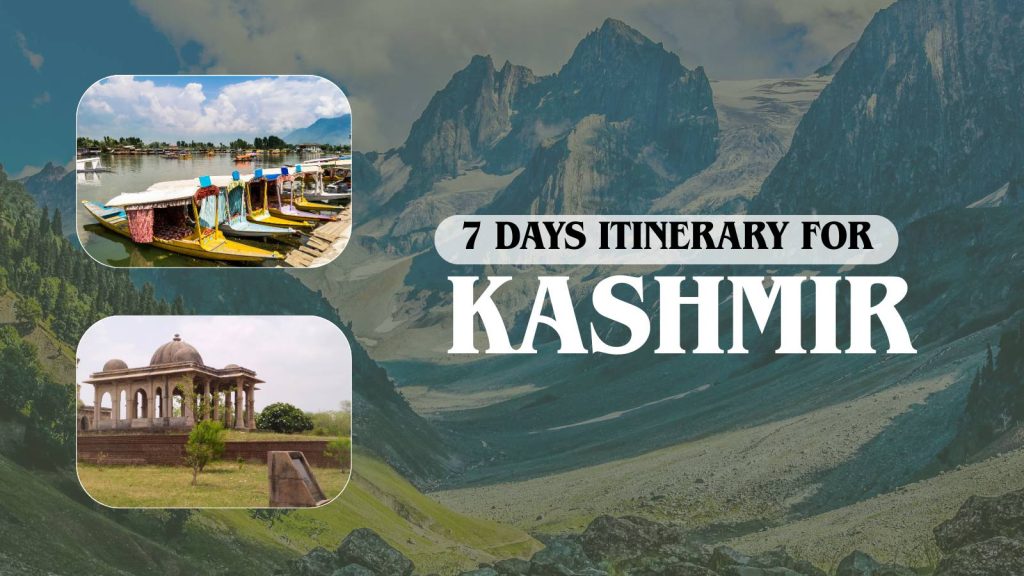
Kashmir is not a destination you should visit in a hurry. The valleys, mountains, lakes, and alpine meadows demand time, patience, and a well-thought-out plan. Many travelers make the mistake of underestimating travel time, weather unpredictability, and local transport rules, which leads to rushed sightseeing and unnecessary stress.
This 7-day Kashmir itinerary is designed to solve those problems. It explains where to go, how long to stay, what it costs, how to travel between places, and how to avoid common mistakes. Planning your first Kashmir trip or returning for a deeper experience, this will help you plan smartly and confidently.
7 Days in Kashmir – The Perfect Travel Duration
A 7-day duration allows you to explore Kashmir without constant packing, long daily drives, or physical exhaustion. The terrain of Kashmir is mountainous, which means even short distances can take longer than expected due to winding roads and weather conditions. By planning a week-long trip, you give yourself time to adjust to altitude, weather, and local travel rules.
In seven days, you can comfortably cover the four most important regions of Kashmir:
- Srinagar for lakes, gardens, culture, and shopping
- Gulmarg for snow experiences, Gondola rides, and mountain views
- Pahalgam for valleys, rivers, and peaceful natural scenery
- Sonmarg for glaciers, alpine landscapes, and scenic road journeys
Another major advantage of a 7-day plan is flexibility. If snowfall delays travel, or if you feel like resting one day, you still won’t miss major attractions. This makes the trip more enjoyable rather than stressful.
Best Time to Visit Kashmir (Season-Wise Detailed Guide)
Choosing the correct season can completely change your Kashmir experience. Each season offers a different version of the valley, so understanding what to expect is very important.
Spring (March to April)
Spring marks the beginning of tourism in Kashmir after winter. The valley slowly turns green, flowers start blooming, and the weather becomes comfortable for sightseeing. This is the best season to witness tulip gardens and fresh landscapes. Snow remains visible on higher peaks, adding contrast to the scenery.
Summer (May to June)
Summer is the most popular time to visit Kashmir because the weather is pleasant and all tourist places are fully accessible. Days are ideal for sightseeing, while evenings are cool and refreshing. Because this is peak season, hotels, taxis, and flights should be booked well in advance to avoid high last-minute prices.
Autumn (September to October)
Autumn is underrated but extremely beautiful. Chinar trees turn red and golden, creating a unique atmosphere. Crowds reduce significantly, making sightseeing peaceful. This season is perfect for travelers who want a quieter trip and photographers looking for natural color contrast.
Winter (December to February)
Winter transforms Kashmir into a snow paradise. Gulmarg becomes the center of snow activities like skiing and snowboarding. However, winter travel requires careful planning due to road closures, heavy snowfall, and extremely cold temperatures. Proper winter clothing is essential.
Route Plan & Travel Distance Overview
Ideal Route:
Srinagar → Gulmarg → Pahalgam → Srinagar → Sonmarg → Srinagar
This route minimizes backtracking and reduces fatigue. Total travel distance is approximately 380 km over 7 days.
Complete 7 Day Kashmir Itinerary (Day-by-Day in Detail)
Day 1: Arrival in Srinagar – Houseboat & Garden Exploration
After arriving at the airport, transfer to your hotel or houseboat near Dal Lake. A houseboat stay is highly recommended for first-time visitors because it offers a traditional Kashmiri lifestyle experience with handcrafted interiors and calm surroundings.
In the afternoon, enjoy a Shikara ride on the lake. This experience allows you to see floating gardens, local life on water, and stunning reflections of mountains. The ride feels peaceful and sets the tone for the rest of the trip.
Later, visit the famous Mughal Gardens, which reflect Persian-style architecture and symmetry. These gardens are well maintained and provide panoramic views of the surrounding hills. Evening shopping at local markets helps you understand Kashmiri culture through handicrafts and traditional items.
Day 2: Srinagar to Gulmarg – Scenic Drive & Gondola Ride
The drive from Srinagar to Gulmarg is one of the most scenic journeys in Kashmir. As you move away from Srinagar, landscapes change from urban views to dense forests and open meadows. After checking into your hotel, prepare for the highlight of Gulmarg—the Gulmarg Gondola.
The Gondola ride offers breathtaking aerial views of snow-covered peaks and valleys. Phase 1 is suitable for most travelers, while Phase 2 is recommended for those who want a deeper snow experience. Weather conditions may affect operations, so flexibility is important.
Evening time can be spent walking around the meadow, enjoying hot local food, and acclimatizing to the colder climate.
Day 3: Gulmarg – Snow Activities & Leisure Time
This day is reserved for exploring Gulmarg at a relaxed pace. Winter travelers can enjoy skiing, snow sledging, and snow play, while summer visitors can explore walking trails and scenic viewpoints.
Gulmarg is also ideal for relaxation. Sitting quietly and enjoying mountain silence is just as rewarding as activities. Always keep extra warm clothing because weather changes suddenly here.
Day 4: Gulmarg to Pahalgam – Long but Beautiful Journey
This is the longest travel day, but also one of the most scenic. The route passes through villages, apple orchards, and saffron fields. Upon arrival in Pahalgam, check into a hotel near the Lidder River.
Pahalgam has a slower, calmer atmosphere compared to Gulmarg. Evening walks by the river are perfect for unwinding after a long drive and enjoying nature in silence.
Day 5: Pahalgam Sightseeing – Valleys & Mountain Views
Pahalgam sightseeing requires local taxis due to union rules. Visit:
- Betaab Valley, known for lush greenery and filming locations
- Aru Valley, offering untouched landscapes and peaceful surroundings
- Chandanwari, the base of the Amarnath Yatra
Each valley has a unique character, and spending enough time at each stop enhances the overall experience rather than rushing through.
Day 6: Sonmarg Day Trip – Glacier & Alpine Views
Start early for Sonmarg to avoid traffic. Sonmarg is known for its dramatic mountain scenery and river streams.
A visit to Thajiwas Glacier is the highlight. Snow remains here for most of the year, making it a great spot even during summer months. Proper footwear is essential due to slippery paths.
Day 7: Departure from Srinagar – Final Exploration
Return to Srinagar for departure. Use extra time for relaxed shopping, tasting traditional Kashmiri tea, and buying dry fruits or souvenirs. Airport security can be time-consuming, so arrive early to avoid stress.
Detailed Kashmir Trip Budget (Per Person)
Accommodation
- Budget hotels: ₹1,200–₹2,000 per night
- Mid-range hotels: ₹3,000–₹5,000 per night
- Luxury stays: ₹7,000+ per night
Transport
Private cab for 7 days costs ₹18,000–₹25,000 depending on season and vehicle type.
Food & Activities
Daily food cost ranges between ₹800–₹1,200. Activities like Gondola rides and pony rides may add ₹2,000–₹4,000 total.
Estimated Total Cost:
- Budget trip: ₹15,000–₹18,000
- Mid-range trip: ₹22,000–₹30,000
- Luxury trip: ₹40,000+
Local Guide & Transport Options
Understanding local transport in Kashmir is extremely important because the region follows specific taxi union rules in certain destinations. If you do not plan this properly, you may face confusion or unexpected additional costs during sightseeing.
Private Cab for 7 Days
Hiring a private cab from Srinagar for the entire 7-day trip is the most convenient option. A dedicated driver stays with you throughout the journey and follows your itinerary. This option saves time, reduces stress, and works best for families and couples.
The average cost for a 7-day private cab ranges between ₹18,000 to ₹25,000 depending on the vehicle type (Sedan, SUV, or Innova) and travel season. During peak months like May–June and December snowfall season, prices may increase slightly.
Local Taxi Union Rules (Important to Know)
In places like Gulmarg and Pahalgam, outside taxis are not allowed for internal sightseeing due to local union regulations. Even if you hire a private cab from Srinagar, you will need to book local taxis for specific sightseeing points such as:
- Betaab Valley
- Aru Valley
- Chandanwari
- Certain areas near Gulmarg Gondola
Local sightseeing packages usually cost ₹2,000–₹3,500 depending on the circuit and season. Always confirm rates beforehand and avoid last-minute negotiation pressure.
Self-Drive Cars – Are They Practical?
Self-drive cars are allowed in Kashmir; however, they are not always practical. Due to union restrictions in Gulmarg and Pahalgam, you may still need to hire local taxis for internal sightseeing. Additionally, during winter snowfall, driving conditions can become challenging for inexperienced drivers.
If you are comfortable with mountain driving and want flexibility, self-drive can work. Otherwise, hiring a local driver who understands road conditions and weather patterns is safer.
Shared Taxis & Budget Transport
Budget travelers can opt for shared taxis or local buses between Srinagar and nearby towns. While this option reduces travel costs, it limits flexibility and comfort. Shared transport may not stop at scenic viewpoints, and schedules can vary.
This option is suitable for backpackers who prioritize cost over convenience.
Pony Rides & Local Transfers
In areas like Sonmarg and glacier regions, vehicles cannot go beyond certain points. Pony rides become the primary transport option to reach places like Thajiwas Glacier. Always agree on pricing before starting the ride to avoid misunderstandings.
FAQs
1. How can I reach Kashmir from major Indian cities?
You can reach Kashmir by air, road, or rail. The fastest and most convenient option is to fly to Srinagar, which has direct flights from Delhi, Mumbai, Bangalore, and other major cities. Alternatively, you can take a train to Jammu and continue by road, but this adds 7–8 hours of additional travel time.
2. Do I need any permits to visit Kashmir?
Indian citizens do not require special permits to visit major tourist destinations in Kashmir. However, if you plan to travel to restricted or border-sensitive areas beyond regular tourist zones, permits may be required. Always check local advisories before planning offbeat trips.
3. What type of clothing should I pack for unpredictable weather?
Kashmir’s weather can change suddenly, even in summer. Layered clothing works best. Carry a light jacket in summer and heavy thermals with waterproof outerwear in winter. Comfortable walking shoes are essential, especially for valley and glacier visits.
4. Are ATMs and digital payments easily available?
ATMs are available in main towns like Srinagar, Gulmarg, and Pahalgam. Most hotels and restaurants accept digital payments. However, small vendors, pony owners, and local taxis may prefer cash. Keeping small cash denominations is advisable.
5. Is vegetarian food easily available in Kashmir?
Yes, vegetarian food is widely available in tourist areas. While Kashmiri cuisine is famous for non-vegetarian dishes, restaurants in major destinations serve North Indian, South Indian, and vegetarian meal options. Travelers with dietary restrictions can comfortably manage.
6. How reliable is mobile network connectivity in Kashmir?
Postpaid connections from major telecom providers usually work well in tourist areas. Prepaid SIM cards from outside Jammu & Kashmir may not function properly. Internet speed may fluctuate in remote valleys, so plan accordingly if you rely on constant connectivity.
7. Is travel insurance recommended for a Kashmir trip?
Travel insurance is not mandatory but highly recommended, especially during winter months. It provides coverage for flight delays, weather-related disruptions, medical emergencies, and unexpected cancellations due to snowfall or road closures.
8. Are there medical facilities available in case of emergencies?
Major towns like Srinagar have well-equipped hospitals and clinics. Smaller destinations have basic medical facilities. Travelers with specific health conditions should carry required medicines and consult a doctor before visiting high-altitude areas.
9. Can senior citizens comfortably follow a 7-day Kashmir itinerary?
Yes, senior citizens can comfortably complete this itinerary with proper pacing. Avoid overloading daily schedules, ensure comfortable hotel stays, and minimize strenuous trekking. Hiring a private cab adds convenience and reduces fatigue.
10. Is Kashmir suitable for solo female travelers?
Yes, Kashmir is generally welcoming toward tourists, including solo female travelers. Staying in reputable hotels, hiring verified drivers, and following standard travel precautions ensure a safe and comfortable experience.