
Best Places to Travel with Kids in India: Where to Go by Age, Budget & Season
The best places to travel with kids in India include Goa, Kerala, Ooty, Jaipur, Udaipur, Mysuru, Manali, Kashmir,…

Story behind the 51 Shakti Peethas is rooted in Hindu mythology, specifically in the tale of Sati and Lord Shiva. Here is a brief summary of the legend:
Sati, also known as Dakshayani, was the daughter of Daksha Prajapati, one of the sons of Lord Brahma. Sati was an ardent devotee of Lord Shiva and eventually married him, despite her father’s disapproval. Daksha did not approve of Shiva’s ascetic lifestyle and unconventional ways.
Daksha once organized a grand yagna (sacrificial ritual) and invited all the deities except Shiva and Sati. Sati was deeply hurt by this deliberate exclusion and decided to go to the yagna to confront her father. Despite Shiva’s attempts to dissuade her, Sati went to the yagna uninvited.
When Sati arrived, Daksha insulted her and Shiva in front of all the guests. Unable to bear the humiliation of her husband and herself, Sati immolated herself in the sacrificial fire, vowing to return and be born as Daksha’s daughter again to marry Shiva.
When Shiva learned of Sati’s death, he was devastated and furious. In his rage, he performed the Tandava, the dance of destruction, and carried Sati’s charred body on his shoulders. This caused chaos and imbalance in the universe.
To save the universe from Shiva’s wrath, Lord Vishnu used his Sudarshana Chakra (divine discus) to cut Sati’s body into pieces. As Shiva wandered the universe in grief, the pieces of Sati’s body fell to the earth at various locations, which became sacred sites known as Shakti Peethas. Each site is believed to be where a part of Sati’s body, her ornaments, or her clothes fell.
Shakti Peethas are spread across the Indian subcontinent, each being associated with a specific part of Sati’s body and a manifestation of the Goddess Shakti. Exact number and locations of the Shakti Peethas can vary in different texts, but the following are commonly accepted as the 51 primary Shakti Peethas:
1. What are Shakti Peeths?
Shakti Peeths are sacred places associated with the divine feminine energy, where parts of Goddess Sati’s body are believed to have fallen when Lord Shiva was carrying her dismembered body. Places are considered powerful and attract pilgrims seeking blessings from Goddess Shakti.
2. How many Shakti Peeths are there?
There are 51 Shakti Peeths, each representing a specific body part of Goddess Sati, located in various parts of India and beyond, such as in Nepal and Pakistan.
3. Where is the most famous Shakti Peeth?
One of the most famous Shakti Peeths is Vaishno Devi, located in Jammu and Kashmir. It attracts millions of devotees every year and is known for its holiness and significance.
4. Why are the Shakti Peeths important in Hinduism?
Shakti Peeths are important because they represent the divine energy of Goddess Shakti. Pilgrims visit these places to seek blessings, spiritual growth, and strength, as they are believed to be sources of divine power and protection.
5. Are Shakti Peeths only found in India?
While most of the 51 Shakti Peeths are in India, some are located in other countries, including Hinglaj in Pakistan and Guhyeshwari in Nepal.
6. How can one visit the Shakti Peeths?
To visit the Shakti Peeths, one can travel by road, train, or air depending on the location. Many of these shrines are easily accessible to pilgrims, with well-maintained roads and public transportation facilities.
7. What body parts are associated with the Shakti Peeths?
Each Shakti Peeth is linked with a specific body part of Goddess Sati. For example, Kamakhya in Assam is associated with the Yoni, Vaishno Devi is linked with the right hand, and Saptashrungi in Maharashtra is connected to the right foot.
8. Are the 51 Shakti Peeths the only places associated with Goddess Sati?
While there are 51 recognized Shakti Peeths, other temples and shrines dedicated to Goddess Sati exist throughout India. 51 Shakti Peeths are considered the most sacred and spiritually significant.
9. Can Shakti Peeths be visited during any time of the year?
Most Shakti Peeths are open to pilgrims throughout the year. However, specific festivals and auspicious days related to Goddess Shakti may attract larger crowds, making it ideal to plan visits around these times for a more spiritually enriching experience.
10. What is the significance of visiting a Shakti Peeth?
Visiting a Shakti Peeth is believed to bring peace, spiritual empowerment, and protection to the devotee. It is also considered a way to honor the divine feminine energy and connect with the cosmic powers of creation.
Shakti Peethas are revered as powerful spiritual sites where devotees can worship the divine feminine energy of Ma Sati.
The best places to travel with kids in India include Goa, Kerala, Ooty, Jaipur, Udaipur, Mysuru, Manali, Kashmir,…
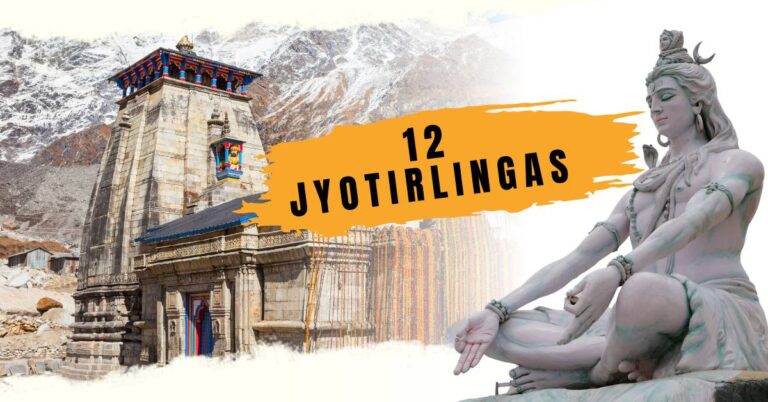
12 Jyotirlingas are sacred shrines dedicated to Lord Shiva, each representing a unique manifestation of the divine. Spread…
Planning a trip to the mystical Kedarnath Temple? Discover the best and most convenient ways to reach this…