
GCC Unified Tourist Visa: Top 10 Itinerary Ideas for Travelers Across the Gulf
The GCC Unified Tourist Visa is a significant step towards simplifying travel across the Gulf Cooperation Council (GCC)…
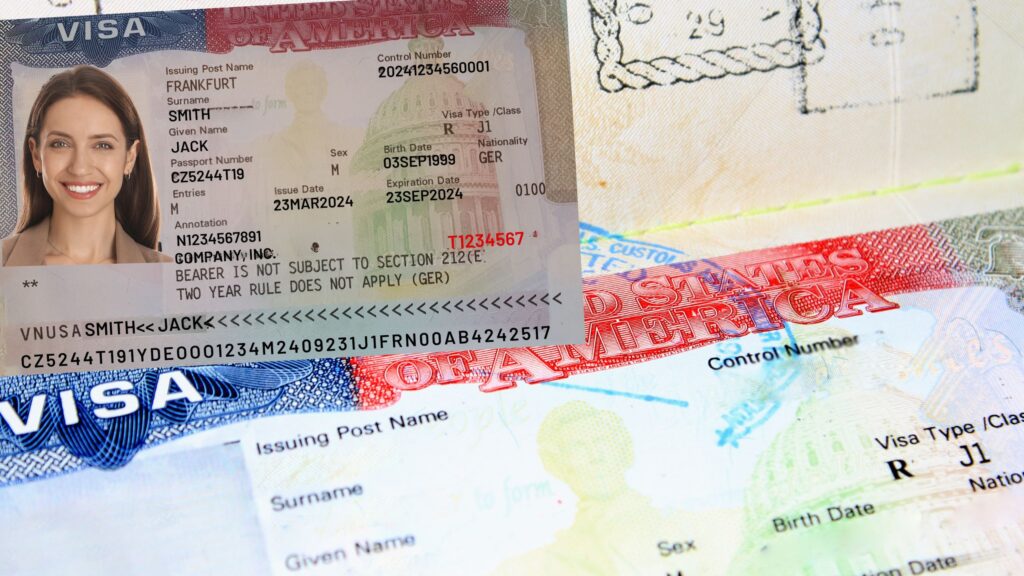
The J1 visa allows foreign nationals to participate in exchange visitor programs in the US for study, research, or cultural exchange, requiring sponsorship, a valid passport, and a Certificate of Eligibility (DS-2019).
The J1 visa is intended for applicants who are interested in pursuing education, an internship, or getting hands-on training in the US for a short period. The J-1 visa program allows individuals to both study and work, at the same time. This non-immigrant visa allows international applicants to enter the US to participate in cultural exchange and gain profession-related skills. Over 170,000 J1 visa holders are in the US working, studying, or teaching. Individuals can come to the US through sponsorship through either a governmental program or a private organization.
Total of 15 different J-1 categories are distinguished depending on the purpose of the stay. The following table provides an overview of which category corresponds to which travel purpose.
| J-1 CATEGORY | OVERVIEW |
| Au Pair | childcare in a US host familyfurther au pair stays possible after a 2-year stay outside the USAduration: 12 months (can be extended by a further 6, 9 or 12 months) |
| Camp Counselor | supervision of school groupsduration: varies depending on the camp and sponsor |
| College and University Student | study with a government scholarshippart-time work on-campus possible (full-time work during semester breaks)duration: for non-degree students max. 24 months; for degree students depending on program length |
| Government Visitor | government visit to strengthen professional and personal relationships with US federal, state or local government agenciesduration: max. 18 months |
| Intern | study-related internship for students or graduatesfurther internships possible after at least 1 semester outside the USAduration: max. 12 months |
| International Visitor | promoting understanding of foreign cultures through cultural ambassadors selected by the U.S. State Departmentduration: max. 12 months |
| Physician | doctors in training and further education for the purpose of observation, consultation, research or teachingduration: max. 5 years |
| Professor | promoting ideas and research projects and fostering cooperation between research institutions in the USA and other countriesfurther program participations possible every 24 monthsduration: depending on the length of the planned project in the USA, max. 5 years (exceptions possible) |
| Research Scholar | promoting ideas and research projects and fostering cooperation between research institutions in the USA and other countriesfurther program participations possible every 24 monthsduration: depending on the length of the planned project in the USA, max. 5 years (exceptions possible) |
| Secondary School Student | high school exchangestart often only possible in the summer semester |
| Short-Term Scholar | research or teaching trip by academics with specialized knowledgeduration: max. 6 months |
| Specialist | knowledge exchange between foreign and US expertsduration: max. 12 months |
| Summer Work Travel | summer jobs for students (during semester breaks)work permit for almost any seasonal jobfurther program participation possible (as long as student status is maintained)duration: 4 months between May and October |
| Teacher | full-time teaching at recognized primary and secondary schoolsteaching cultural aspects of the home countryenabling a dialog between US students and students in the home countryfurther program participation possible after a 2-year stay outside the USADuration: 3 years, extendable to max. 5 years |
| Trainee | job-related internship or training for graduates or young professionalsfurther program participation possible after a 2-year stay outside the USAduration: max. 18 months |
J-1 visa is an important non-immigrant visa for those seeking to participate in study-based exchange visitor programs in the United States. Here are some key points about the importance of the J-1 visa for study purposes:
It’s important to note that the J-1 visa program has specific requirements and regulations, including a two-year home residence requirement in some cases, which means that participants must return to their home countries for at least two years after completing their program before being eligible for certain other visa categories or permanent residency in the U.S.
J-1 Visa is a non-immigrant US visa which allows individuals to both work and study at the same time. The visa is issued on a temporary basis to individuals who want to visit the US as part of a work and travel program.
There are many categories of J-1 Visa which are available to individuals based on their requirements and eligibility criteria. Based on the type of the J-1 Visa program, the applicant will need to find a sponsoring organization to carry out the application process.
In order to apply for the J-1 Visa program, an applicant is required to follow these steps:
In order to apply for the J-1 Visa, the applicant is required to meet the eligibility criteria based on the category of the programs. Certain programs may require the applicant to appear for the interview, however, it is not applicable to all categories. Following are few of the eligibility factors to qualify for the J-1 Visa program:
A few different stages in the J-1 visa application process add to the total U.S. J-1 visa processing time. Although some pieces of the application procedure go by quickly — just fill out a form and you’re done — others take a while, requiring you to wait for administrative officials to process and review your documents.
The following three steps each have their own processing time:
The first key step in the J-1 visa application process is getting your Form DS-2019. You’ll need this document before you can schedule an interview and get final approval for your J-1 visa.
Getting the DS-2019 is a process in and of itself. Sponsor organizations like Intrax Global Internships can only issue your DS-2019 once you have completed all of these tasks:
Once you’ve done that, Intrax Global Internships can process and send you your DS-2019. The J-1 visa processing time for your Form DS-2019 is up to four weeks. The company needs that time to review your application, process your forms, and ship the DS-2019 directly to your home address.
That means that the first step of the J-1 visa application process might take around a month. You can make this process faster by completing your application steps as quickly as possible: if you fill out your forms, gather your documents, and pay your fees rapidly, then you can move onto the next step of the application process sooner.
Once you have your Form DS-2019, complete your pre-departure orientation, and fill out the online nonimmigrant visa application form (DS-160), you’re ready for the next stage in the process: scheduling and attending your J-1 visa interview at the nearest U.S. embassy or consulate.
The wait time for interviews can vary depending on your home country: some countries receive more visa applications or have more of a backlog, which means it will take longer for you to have your interview. You can learn your embassy’s wait time by visiting the United States’ visa appointment wait times website. The website lists estimated appointment wait times, based on workload and staffing, for three types of visas:
Student and exchange visitor visa wait times can vary widely — just look at the different visa wait times for these different cities as of August 2021:
After your J-1 visa interview, approval depends on the embassy. Some issue visas immediately, and you’ll leave with your J-1 visa foil in hand. Others mail it to you in days or weeks. In rare cases, “administrative processing” delays things further—requiring extra documents or checks. This can take anywhere from weeks to months, with the U.S. State Department suggesting a 180-day wait before inquiring, unless it’s an emergency.
Fastest Scenario (a few weeks):
Slowest Scenario (multiple months):
Grace Periods:
You can enter the U.S. up to 30 days before your program start date and must leave within 30 days after it ends (per Form DS-2019). During these periods, you’re under USCIS jurisdiction—no work or program activities allowed. Book flights only after visa approval to avoid timing issues.
Extensions & Waivers:
FAQs
A J1 Visa is a non-immigrant visa issued by the U.S. government for individuals participating in work-and-study-based exchange programs. It is commonly used by students, interns, trainees, teachers, and researchers.
Eligibility varies depending on the specific exchange program, but in general, applicants must:
The J1 Visa costs include:
Processing time varies but typically includes:
Yes, J1 Visa holders can bring their spouse and children (under 21) on a J2 Visa. J2 holders can study and may apply for work authorization.
J1 Visa holders can work only under the conditions specified by their program. Some programs allow part-time work with restrictions.
Some J1 Visa holders must return to their home country for two years after the program before applying for certain U.S. visas or permanent residency. Waivers are available in certain cases.
Check your visa application status on the CEAC website (https://ceac.state.gov) and SEVIS status through your program sponsor.
The GCC Unified Tourist Visa is a significant step towards simplifying travel across the Gulf Cooperation Council (GCC)…
The H-1B visa remains one of the most important work visas for skilled professionals looking to work in…
TN visa is a non-immigrant classification that enables eligible Canadian and Mexican citizens to work in the United…

1 comment