GCC Unified Tourist Visa: Top 10 Itinerary Ideas for Travelers Across the Gulf
The GCC Unified Tourist Visa is a significant step towards simplifying travel across the Gulf Cooperation Council (GCC)…
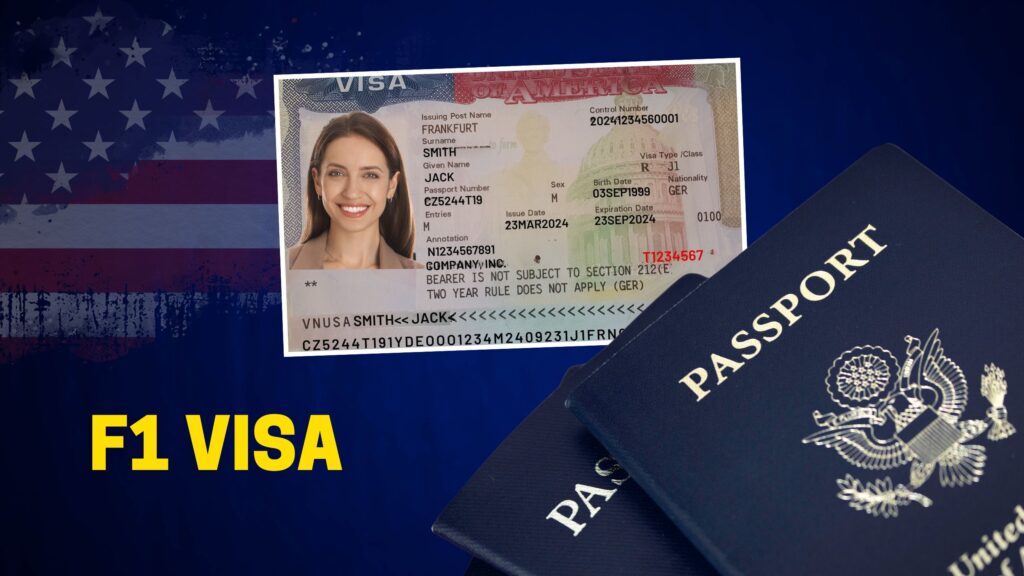
The F-1 student visa is a non-immigrant visa that allows international students to study full-time at accredited educational institutions in the United States. This visa is issued to individuals enrolled in academic programs, including universities, colleges, high schools, and language training institutions. To qualify, applicants must be accepted by a U.S. institution certified by the Student and Exchange Visitor Program (SEVP) and demonstrate sufficient financial resources to cover tuition and living expenses.
F-1 visa holders are permitted to stay in the U.S. for the duration of their studies and may be eligible for limited on-campus employment and practical training opportunities, such as Optional Practical Training (OPT) or Curricular Practical Training (CPT). Compliance with visa regulations, including maintaining full-time enrollment and reporting any changes in status, is essential for maintaining legal status in the U.S.
All the candidates are required to fulfil all the requisite criteria while appearing for an F1 Visa Interview, which will increase their chances of receiving acceptance for the same:
| Criteria | Criteria Fulfilment for getting an F1 Visa in the USA |
|---|---|
| Foreign Residence | The candidate must have residence in a foreign country and intend to return there upon completing the course. |
| Financial Support | The candidate must demonstrate that he/she has enough finances to support his/her studies and stay in the US. |
| Sponsoring Education Institution | The candidate is expected to study at the educational institution through which the visa was granted. |
| Strong relation to home country | The candidate must prove that he/she has a strong relationship with his/her home country and they have their family, assets (like house etc.) and bank accounts, in their home country. |
To qualify for an F-1 student visa, applicants must meet several key requirements established by U.S. immigration authorities. First, they must receive an acceptance letter from a U.S. institution accredited by the Student and Exchange Visitor Program (SEVP). They must also demonstrate strong ties to their home country, such as family, property, or career prospects, to prove their intent to return after completing their studies. Financial stability is another critical factor, as applicants must show they have sufficient funds to cover tuition, living expenses, and other costs without relying on unauthorized employment. Additionally, proficiency in English is typically required unless the student is enrolling in an English language program. Lastly, applicants must maintain a valid passport and provide all necessary documentation during the visa interview, including the Form I-20 issued by their institution.
Applicants for an F-1 student visa must present several essential documents during their visa interview to demonstrate their eligibility and preparedness for studying in the United States. These include a valid passport, the Form I-20 issued by the U.S. institution, and the DS-160 confirmation page, which verifies the completion of the online visa application. Additionally, applicants must provide a visa appointment confirmation, a recent passport-sized photograph that meets U.S. visa requirements, and the visa application fee receipt. Proof of financial support, such as bank statements, affidavits of support, or scholarship letters, is also required to confirm the ability to cover tuition and living expenses. Academic transcripts, standardized test scores (such as TOEFL, IELTS, or GRE, if applicable), and an acceptance letter from the SEVP-certified school further strengthen the application. Providing all necessary documents accurately and completely is important for a successful visa interview.
Applicants between the age group of 14 through 79 are required to go through the visa interview process while applicants under the age 13 and over the age of 80 are not required to appear for an interview unless specified by the embassy or consulate. During the interview, the applicant’s biometric data and the documents are collected and reviewed to determine the eligibility parameters. Depending on the number of applications received by the consulate/embassy, the visa interview process may take a significant amount of time. Applicants are advised to plan their application process at the earliest possible.
The visa doesn’t allow the holder to illegally work in the US under the F1 Visa which could result in deportation. Based on certain factors, the international students might be allowed to work 20 hours a week. Applicants can also seek for an approval to work off campus for up to 12 months. Applicants are advised to get in touch with the international student advisor at their university/institution/school to obtain further information pertaining to working in the UK on an F1 Visa.
For comprehensive information about the F-1 student visa application process, please visit the U.S. Department of State website.
Students are encouraged to apply for their F-1 visa as soon as they receive their Northeastern Form I-20. U.S. Embassies or U.S. Consulates are able to issue F-1 entry visas up to 365 days before the program start date listed on your I-20.
In most countries, student visa applicants must appear in person for the visa interview. However, each U.S. Embassy or U.S. Consulate sets its own interview policies and procedures. Students should consult the specific embassy website or call for application instructions.
FAQs
An F1 Visa is a non-immigrant visa for international students who want to study full-time at a U.S.-approved school, college, or university.
To be eligible for an F-1 student visa, an applicant must meet several key criteria established by U.S. immigration laws. The individual must have been accepted into a full-time academic program at a U.S. institution accredited by the Student and Exchange Visitor Program (SEVP). The program must be a degree, diploma, or certificate course offered by a recognized university, college, high school, or language training institution. Additionally, the applicant must demonstrate sufficient financial resources to cover tuition, living expenses, and other costs without relying on unauthorized employment. English language proficiency is typically required unless the student is enrolling in an English language training program.
Yes, spouses and children (under 21) can apply for an F2 Visa, but they cannot work in the U.S.
Yes, but it requires a change of status through employment (H1B Visa), marriage, or family sponsorship.
You can track your visa application on the CEAC website (https://ceac.state.gov) and check SEVIS status through your school.
The GCC Unified Tourist Visa is a significant step towards simplifying travel across the Gulf Cooperation Council (GCC)…
The H-1B visa remains one of the most important work visas for skilled professionals looking to work in…
TN visa is a non-immigrant classification that enables eligible Canadian and Mexican citizens to work in the United…