
GCC Unified Tourist Visa: Top 10 Itinerary Ideas for Travelers Across the Gulf
The GCC Unified Tourist Visa is a significant step towards simplifying travel across the Gulf Cooperation Council (GCC)…

Today, U.S. Citizenship and Immigration Services (USCIS) announced that the initial registration period for the fiscal year 2026 H-1B cap will open at noon Eastern on March 7 and run through noon Eastern on March 24, 2025. During this period, prospective petitioners and representatives must use a USCIS online account to register each beneficiary electronically for the selection process and pay the associated registration fee for each beneficiary.
The U.S. Citizenship and Immigration Services (USCIS) has officially announced the eligibility criteria and next application period for the H-1B visa, a key pathway for skilled foreign professionals seeking employment in the United States.
The H-1B visa is designed for professionals in specialized occupations who have the required qualifications to perform jobs that require advanced knowledge in specific fields. This visa enables foreign workers to contribute to the U.S. economy, particularly in industries such as technology, engineering, healthcare, finance, and research. The visa is also available for distinguished high-fashion models and professionals working on Department of Defense (DOD) research projects.
To qualify, both the job role and the applicant must meet strict standards:
Applicants must meet at least one of the following:
USCIS also oversees two additional visa classifications:
✔️ H-1B2: Research & Development for the U.S. Department of Defense (DOD)
Requires a bachelor’s or higher degree.
Must be accompanied by a DOD project manager’s verification letter confirming the applicant’s role in a government research project.
No LCA required.
✔️ H-1B3: Haute Couture & Fashion Models
Reserved for internationally recognized high-fashion models.
Requires an LCA from the Department of Labor plus Form I-129.
What You Need to Do Now?
With the strict application timeline and updated eligibility requirements, applicants must prepare well in advance. Follow these steps to maximize your chances:
✔️Check your eligibility and gather all required documents.
✔️ Consult an immigration expert or attorney to ensure compliance.
For official information, visit the USCIS website: uscis.gov
The H-1B visa is a non-immigrant visa that allows U.S. companies to employ foreign workers in specialty occupations that require theoretical or technical expertise. These occupations typically include fields such as IT, finance, engineering, architecture, and more. The visa is initially granted for up to three years and can be extended to a maximum of six years.
To be eligible for an H-1B visa, both the employer and the employee must meet specific criteria:
H-1B visa program is subject to an annual cap, which limits the number of visas issued each fiscal year. The current cap is set at 65,000 visas, with an additional 20,000 visas available for applicants with a master’s degree or higher from a U.S. institution. This brings the total number of available visas to 85,000.
Before filing an H-1B petition, the employer must obtain a certified Labor Condition Application (LCA) from the U.S. Department of Labor (DOL). The LCA ensures that the employer will pay the prevailing wage and provide working conditions that do not adversely affect U.S. workers.
Key Points:
Once the LCA is certified, the employer can proceed with filing the H-1B petition with the U.S. Citizenship and Immigration Services (USCIS). The petition must include the following documents:
If the number of H-1B petitions received by USCIS exceeds the annual cap, a lottery system is used to randomly select petitions for processing. The lottery is conducted in two phases:
Key Points:
Once selected in the lottery, the H-1B petition undergoes processing by USCIS. This includes a review of the petition and supporting documents to ensure compliance with H-1B requirements.
Key Points:
If the H-1B petition is approved, the employee can apply for an H-1B visa at a U.S. consulate or embassy in their home country. This process involves:
The H-1B registration period typically opens in early March and lasts for a minimum of 14 calendar days. During this period, employers must electronically register each potential H-1B employee with USCIS.
Key Dates:
The H-1B lottery is conducted shortly after the registration period closes. Employers are notified of the selection results by the end of March.
Key Dates:
Selected employers have a 90-day window to file their H-1B petitions with USCIS. The filing period typically begins on April 1 and ends on June 30.
Key Dates:
Employers who opt for premium processing can expect a decision within 15 calendar days from the date USCIS receives the petition.
Key Dates:
The H-1B visa program is highly competitive, with demand often exceeding the annual cap. The lottery system adds an element of uncertainty, as not all petitions are guaranteed to be selected.
Solution:
USCIS may issue an RFE if additional documentation is required to process the H-1B petition. This can delay the approval process.
Solution:
Immigration policies and regulations can change, impacting the H-1B visa process.
Solution:
The H-1B visa is a valuable opportunity for both U.S. employers and foreign workers to collaborate in specialty occupations. As the application period for the H-1B visa for fiscal year 2025 begins, it is essential to understand the process, meet all requirements, and adhere to key deadlines. By following the steps outlined in this guide and seeking professional assistance when needed, employers and employees can navigate the H-1B visa process with confidence and increase their chances of success.
The GCC Unified Tourist Visa is a significant step towards simplifying travel across the Gulf Cooperation Council (GCC)…
The H-1B visa remains one of the most important work visas for skilled professionals looking to work in…
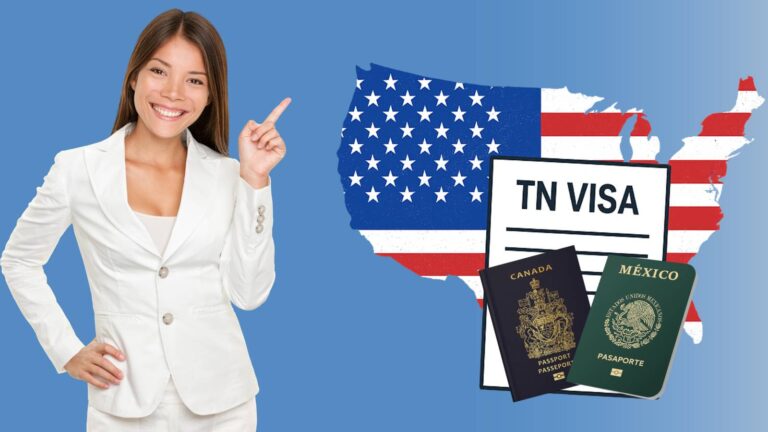
TN visa is a non-immigrant classification that enables eligible Canadian and Mexican citizens to work in the United…