

Travel Guide for Holi Festival in Vrindavan for USA Traveler
Holi Festival in Vrindavan is one of the most vibrant and unforgettable experiences for travelers from around the…
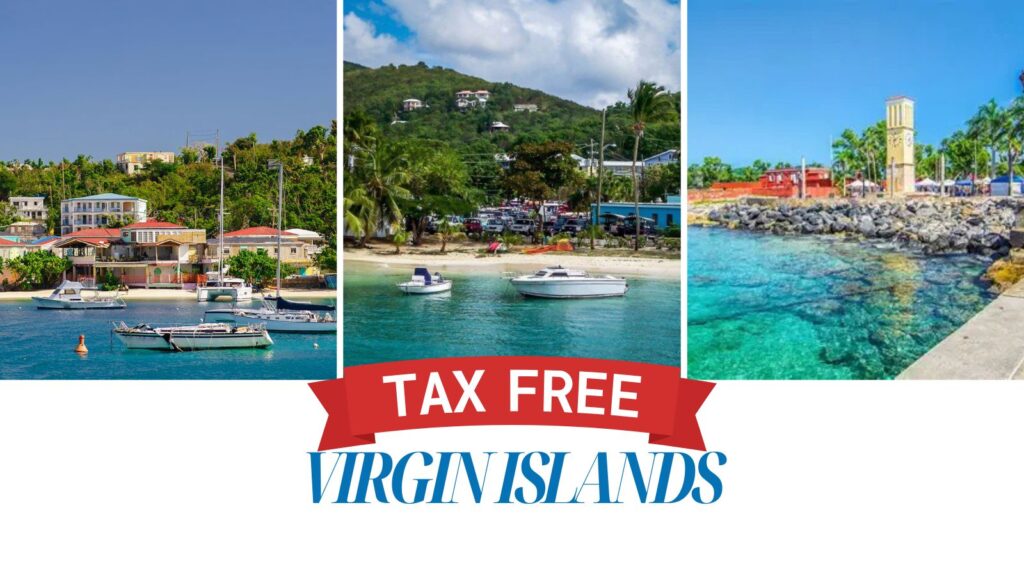
The U.S. Virgin Islands has become a top destination for entrepreneurs, business owners, and high-income individuals seeking significant tax advantages while enjoying life in a Caribbean paradise. At the heart of this opportunity lies a complex system of Virgin Islands taxes that mirrors the U.S. federal code but allows qualified residents and businesses to benefit from powerful local incentives.
Do US Citizens Need a Passport for the Virgin Islands
While the allure of paying little to no taxes is strong, the reality involves detailed compliance, strict residency rules, and hidden challenges that aren’t often discussed. Here is the full picture of living tax-free in the U.S. Virgin Islands and reveals what’s often left out when talking about Act 60 and related programs.
U.S. Virgin Islands attract many individuals seeking lower tax obligations—but the “tax‑free” promise is misleading. Understanding Virgin Islands taxes requires grasping two systems: the mirror tax system for bona fide residents, and separate incentive programs for businesses.
How to Legally Move to the US Virgin Islands Without Changing Citizenship
While personal income taxes may feel reduced, you still owe taxes at U.S. rates—just paid locally. Only specific business incomes enjoy significant reductions. The concept is valid—but what is omitted often involves compliance burdens, residency rules, and lifestyle tradeoffs.
Virgin Islands uses the same federal tax rate structure as the United States under IRC §932, but with one major distinction: residents pay their taxes directly to the Virgin Islands Bureau of Internal Revenue (VIBIR) instead of the IRS. If you qualify as a bona fide resident of the U.S. Virgin Islands (USVI), you must report and pay taxes on your worldwide income to the USVI—not the federal government.
In most cases, you don’t need to file a separate federal return unless you meet specific exceptions. These include earning income from the U.S. mainland or spending too many days outside the Virgin Islands, which could disqualify your residency status.
The USVI mirrors the IRS tax code, applying federal-style income, capital gains, and self-employment taxes. However, the territorial government retains all tax revenue locally. This means you follow a federal tax system while dealing entirely with the territorial tax authority, not the IRS.
If you’re a non-resident or part-year resident, things get more complicated. You may need to file with both the USVI and the IRS, and you’ll have to carefully allocate income between the two jurisdictions. Staying compliant with residency rules and keeping thorough records becomes essential in these situations.
It’s important to note that the “tax-free” label linked to the Virgin Islands doesn’t apply to all residents. Instead, it primarily benefits qualified businesses and investors under special programs like Act 60 (formerly Acts 20 and 22). These programs offer significant tax reductions—sometimes eliminating corporate income tax, capital gains, and other taxes—for those who meet specific criteria.
However, if you’re an individual who doesn’t participate in these incentive programs, you still have to pay personal income taxes—just to the USVI government, not the IRS.
Living in the Virgin Islands can absolutely provide strategic tax advantages, especially for entrepreneurs and investors under Act 60. But it doesn’t offer a complete escape from taxes. Understanding the rules and staying compliant is key to making the most of the opportunity.
Although Act 60 is specific to Puerto Rico, the USVI runs parallel incentive schemes via the Economic Development Commission (EDC) and RTPark. These programs offer dramatic reductions: up to a 90% credit on corporate income, full exemptions on dividends and capital gains for USVI-resident owners, no gross receipts or property tax, and reduced customs duties and excise taxes.
The EDC and RTPark aim to promote high-tech, export-based, or tourism investments in the territory. These incentive schemes lower Virgin Islands taxes at the business level—not direct individual tax liability
Eligible companies can dramatically reduce their USVI-source tax burden:
These benefits rely on satisfying thresholds like capital investment and residency requirements, and only apply to income generated by approved business operations, not salary, real estate rents, or personal investment income
Three IRS tests are essential:
You must track travel, maintain local bank accounts, voter registration, housing in the territory, and reduce mainland ties. Failing tests can trigger IRS scrutiny, dual filing, and loss of benefits
Qualifying for EDC or RTPark status demands ongoing compliance:
These obligations mean that Act 60-like benefits come with significant operational and reporting responsibilities
Moving to USVI requires reconciling financial planning with day-to-day realities:
The IRS actively monitors residency claims by U.S. citizens residing in territories. Detailed records of travel, housing, banking, family, and social ties are essential to substantiate claims. Taxpayers must file Form 8689 with their USVI return and may need to submit Form 1040INFO if they have U.S.-source income. If flagged, individuals may face audits, dual taxation, penalties, and loss of incentive eligibility. Professional guidance from USVI tax specialists is vital to navigate these complexities legally and accurately
Promoters tout the economic impact of these incentives, yet many locals voice concerns:
Critics argue that infrastructure and workforce improvements lag behind expectations, and local benefits are unevenly distributed
Puerto Rico’s Act 60 offers personal exemptions—including capital gains and dividends—for bona fide residents and investors. In contrast, the USVI incentives focus on business-level savings. Act 60 is more attractive for traders, individual investors, and retirees.
Meanwhile, USVI programs (EDC and RTPark) are ideal for service-based businesses that commit to local operations and hiring. Understanding your personal and business profile is key to choosing between jurisdictions.
Living tax-free in the USVI isn’t a magic loophole—it’s a structured set of incentive programs tied to tangible commitments to the territory. You may shift your Virgin Islands taxes to local collections and dramatically reduce liability as a business, but only with full operational presence, strict compliance, and realistic expectations of cost and lifestyle.
For individuals without qualifying business operations or unwilling to relocate lifestyle and business, the benefits may not outweigh the burdens. Act 60-inspired tax benefits exist—but they demand discipline, documentation, and dedication to both the job and the island.
FAQs
Residents of the U.S. Virgin Islands generally do not pay U.S. federal income tax. Instead, they pay income taxes directly to the Virgin Islands Bureau of Internal Revenue (VIBIR) under a “mirror tax system” that uses the U.S. Internal Revenue Code as its base. So, even though the rules are similar to federal tax law, the revenue goes to the local USVI government.
The mirror tax system means that the tax code in the U.S. Virgin Islands is nearly identical to the U.S. federal tax code — with one major change: where the federal law says “United States,” it is interpreted as “Virgin Islands.” This system ensures residents and companies in the USVI pay taxes at the same rates but to the VIBIR, not the IRS.
Act 60, also known as the Economic Development Program (EDP), offers tax incentives for businesses and individuals that relocate to the Virgin Islands. Qualified participants can receive up to 90% exemptions on corporate income tax, 100% exemption on dividends, and significant reductions on capital gains and interest income, provided they meet specific residency and operational requirements.
Eligibility is limited to individuals who become bona fide residents of the Virgin Islands and/or companies that relocate operations to the islands. Applicants must meet physical presence tests, establish economic and social ties in the USVI, and contribute to the local economy through employment, charitable donations, and local business operations.
To qualify as a bona fide resident, individuals must physically reside in the USVI for at least 183 days per year, have their principal place of business or employment located there, and not have a closer connection to the U.S. mainland. Maintaining local bank accounts, driver’s license, and community involvement is also crucial for proving residency.
In most cases, if you are a bona fide resident of the Virgin Islands for the entire tax year, you file only with the Virgin Islands Bureau of Internal Revenue. However, if you split time between the USVI and mainland U.S. or have income from both places, you may be required to file with both the IRS and VIBIR.
Yes, but under Act 60, qualified investors can receive 100% exemptions from capital gains tax on income sourced in the Virgin Islands. These benefits apply only after receiving approval through the Economic Development Commission (EDC) and meeting residency and source-of-income requirements.
Participants must submit annual compliance reports, donate a set minimum to local charities, and meet job creation targets if operating a business. The Virgin Islands government closely monitors compliance and may revoke tax benefits if these obligations are not met. Regular audits and proof of physical presence may be required.
Yes, property owners in the Virgin Islands pay annual real property taxes, although rates are relatively low compared to many U.S. states. The current rate depends on property classification (residential, commercial, etc.). These are separate from the income tax incentives under Act 60.
While the benefits are substantial, risks include strict scrutiny from the IRS, complex residency compliance, high cost of living, and limited infrastructure in some areas. Those who do not genuinely relocate or who attempt to manipulate the system can face audits, penalties, and disqualification from future benefits.
Holi Festival in Vrindavan is one of the most vibrant and unforgettable experiences for travelers from around the…
December in the United States is a time of magic, celebration, and adventure. From dazzling Christmas lights and…
If you are a fan of The Vampire Diaries or simply love exploring iconic filming locations, the Mystic…


1 comment