

Andorra Passport: Travel, Tax, Benefits and Residency Perks Explained
Andorra, a small yet thriving principality nestled between France and Spain in the Pyrenees mountains, has become an…
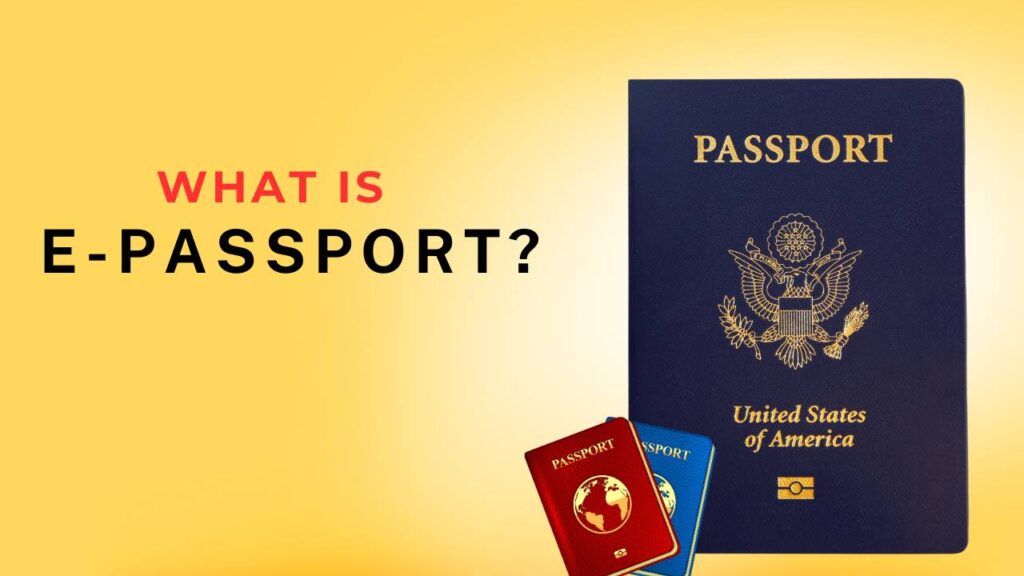
Rapidly evolving travel landscape, traditional travel documents are being replaced by smarter, more secure alternatives. One such revolutionary upgrade is the e-passport — a biometric, chip-enabled passport designed to make travel safer, faster, and more secure. As a tech-savvy traveler and researcher of global mobility trends, I find this advancement both fascinating and essential for modern international journeys.
US Visa Process 2025 for All Nationalities – Updated Rules & Timeline
But for most travelers, one question remains: what is e-passport, and how does it differ from the traditional passport we’ve known for decades?
Know everything you need to know about e-passports in the United States, including how they work, their benefits, core features, and a step-by-step guide to applying for one.
An e-passport, also called a biometric passport or digital passport, is a next-generation travel document that includes an embedded microchip in the front cover. This chip securely stores the holder’s personal details, biometric information, and digital security credentials. It’s issued by governments in compliance with international security standards set by the International Civil Aviation Organization (ICAO).
Unlike traditional passports, which only contain printed information and machine-readable zones (MRZ), e-passports also allow for automated identity verification at immigration points. The chip inside contains a digitally signed photograph, and in some cases, fingerprints or iris scans, all encrypted to prevent unauthorized access.
In short, when people ask what is e-passport, the answer is clear — it’s a high-tech identity document that’s smarter, safer, and globally accepted.
At the core of the e-passport lies a contactless integrated circuit (microchip) embedded within the front cover. This chip is capable of storing biometric data and encrypted digital identifiers.
The chip can be read by special scanners at immigration checkpoints, allowing for a quick, touchless verification of your identity. This means less manual checking and fewer queues, especially at airports with automated e-gates.
Printed documents, the chip also enables governments to store revocation certificates or travel history logs, depending on national regulations. In the U.S., only the facial biometric is currently stored.
U.S. e-passports contain a digitally encoded facial image that acts as a biometric identifier. This image is used for facial recognition at security checkpoints, helping verify that the person holding the passport matches the one digitally stored inside.
This reduces the risk of stolen or forged passports being used by imposters. For countries with advanced biometric infrastructure, this also allows travelers to pass through automated border control (ABC) lanes, speeding up the immigration process dramatically.
In the future, more biometric elements such as fingerprints or iris scans could be added to improve multi-factor authentication.
Security is paramount in e-passports. The data stored on the chip is digitally signed by the issuing authority, making it tamper-proof.
If anyone attempts to change or clone the chip’s content, the signature becomes invalid. This serves as a strong protection against passport fraud, identity theft, and illegal immigration activities. U.S. Customs and Border Protection (CBP) uses PKI (Public Key Infrastructure) to verify this digital signature in real time.
Each e-passport is unique and cannot be duplicated without detection — a major leap from traditional machine-readable passports.
The e-passport format used in the U.S. meets global ICAO standards, making it compatible with immigration systems in over 120 countries worldwide.
This ensures that American travelers can experience seamless border crossings in most parts of Europe, Asia, and the Americas. It also supports faster processing in visa waiver programs, like the U.S. ESTA (Electronic System for Travel Authorization) or Schengen Area entry systems.
In short, an e-passport provides you with a globally recognized and future-ready travel document.
One of the most important advantages of the e-passport is its ability to significantly enhance national and international security. By using biometric facial recognition, authorities can detect forged or stolen passports much more efficiently than before.
It also enables instant alerts for suspicious travelers or identities listed in international security databases, such as Interpol, thereby reducing the risk of terrorism and trafficking.
For the traveler, this means greater trust and safety during international travel.
No more long lines at immigration checkpoints! With an e-passport, U.S. citizens can take advantage of automated passport kiosks and Global Entry lanes at major airports.
Instead of face-to-face interviews and manual document verification, biometric e-gates read the chip, compare your photo, and let you pass through in seconds.
This feature is especially helpful for frequent travelers and business professionals who value time-saving and convenience.
Traditional passports are vulnerable to counterfeiting, tampering, or duplication. But with e-passports, the cryptographic protection of data makes it virtually impossible to clone the document.
If a fraudster tries to copy the chip or change its content, border systems will detect the issue immediately due to failed digital signature verification.
This increased security gives both travelers and governments greater confidence in identity integrity.
Since e-passports are globally recognized, holders can travel more freely across borders that require biometric passport authentication.
In many countries, travelers with e-passports can enjoy visa-on-arrival benefits or use fast-track security clearance lanes, resulting in smoother and faster journeys.
Many airports worldwide are now equipped with e-passport scanners, making international travel easier than ever before.
The e-passport is the first step toward the future of digital identity. Many countries are testing mobile passport apps or digital identity wallets, where your credentials can be securely stored on your smartphone.
Soon, we might see contactless, paperless border control, where your e-passport chip syncs with mobile ID platforms or blockchain-based systems for faster, more secure travel.
U.S. citizen applying for a new passport or renewing an old one, rest assured — all passports issued by the U.S. government since 2007 are e-passports by default.
Here’s a step-by-step process to apply or renew:
For first-time applicants or expired passports beyond 15 years, you will need:
Make sure all information matches exactly — discrepancies could delay processing.
You can fill the application online or download a PDF from the official U.S. Department of State website: https://travel.state.gov.
Be prepared for identity verification at the facility.
As of 2025, the current passport fees are:
Accepted payment methods include check, money order, or card (in-person only).
After applying, you can track the status of your passport online via the State Department’s passport tracking portal.
Be sure to factor in delivery time when planning international travel.
From improving border control security to offering fast-track immigration access and future-ready features, the U.S. e-passport is designed to serve as a global identity solution in a connected world.
Whether traveling for business, education, or leisure — upgrading to or renewing your e-passport is one of the smartest moves you can make today.
FAQs
An e-passport, also known as a biometric passport, is a next-generation travel document that contains an embedded electronic microchip. This chip securely stores personal information and a digitally encoded facial biometric that can be scanned for identification. Unlike a regular passport, which relies solely on printed data and machine-readable zones, an e-passport allows for automated identity verification, reduces fraud risk, and complies with international travel security standards.
The United States began issuing e-passports in August 2007. Since then, all U.S. passport books are equipped with electronic chips. If your passport was issued after this date and has the gold chip icon on the front cover, it is already an e-passport. Older versions without this icon are considered traditional passports and are gradually being phased out.
In the United States, e-passports currently store a digital version of the passport holder’s photo, which is used for facial recognition. In some countries, e-passports may also include fingerprints or iris scans. This biometric data allows border control systems to automatically compare the traveler’s face or fingerprints to what’s stored on the chip, ensuring a more secure and accurate identity match.
Yes, e-passports use advanced encryption and digital signatures to protect the data stored on the microchip. The information cannot be read or altered by unauthorized individuals. The U.S. government employs strict security measures, including RF shielding, anti-skimming technology, and PKI (Public Key Infrastructure) to prevent identity theft or chip cloning.
To check if you already own an e-passport, look at the front cover of your U.S. passport. If you see a gold chip icon (a rectangle with a circle in the middle), it means your passport contains an embedded electronic chip and is an e-passport. Any U.S. passport issued after 2007 should include this feature by default.
If your traditional passport is still valid and not expired, you can still use it for international travel. However, many countries now require e-passports for visa-free travel or for using automated immigration kiosks. Once your old passport expires, you will automatically receive an e-passport upon renewal. It is advisable to switch sooner if you travel frequently.
An e-passport offers several benefits:
All new passport applications and renewals in the U.S. are issued as e-passports by default. You can apply by:
Yes, an e-passport is required to enroll in Global Entry, the U.S. Customs and Border Protection program that offers expedited clearance at airports. It’s also recommended for TSA PreCheck and other trusted traveler programs. The biometric data in the e-passport enables smooth identity verification at self-service kiosks and secure lanes.
Yes, global trends indicate that the future of international travel will increasingly rely on e-passports and digital identity systems. Many countries are experimenting with mobile passports, blockchain-based IDs, and contactless immigration. The e-passport is the first step toward a fully digital travel ecosystem, making international movement more secure, efficient, and convenient.
Andorra, a small yet thriving principality nestled between France and Spain in the Pyrenees mountains, has become an…
Air travel has become an essential mode of transportation for millions of people around the world. Whether you…
Applying for a Canada infant passport can be one of the more time-consuming tasks for new parents, but…