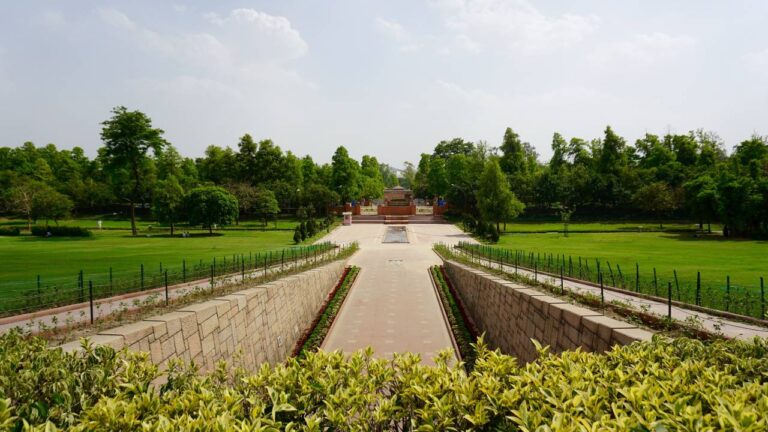
Rajghat: History, Tickets, Timings & Top Travel Tips
Rajghat, situated along the serene banks of the Yamuna River in New Delhi, is one of India’s most…
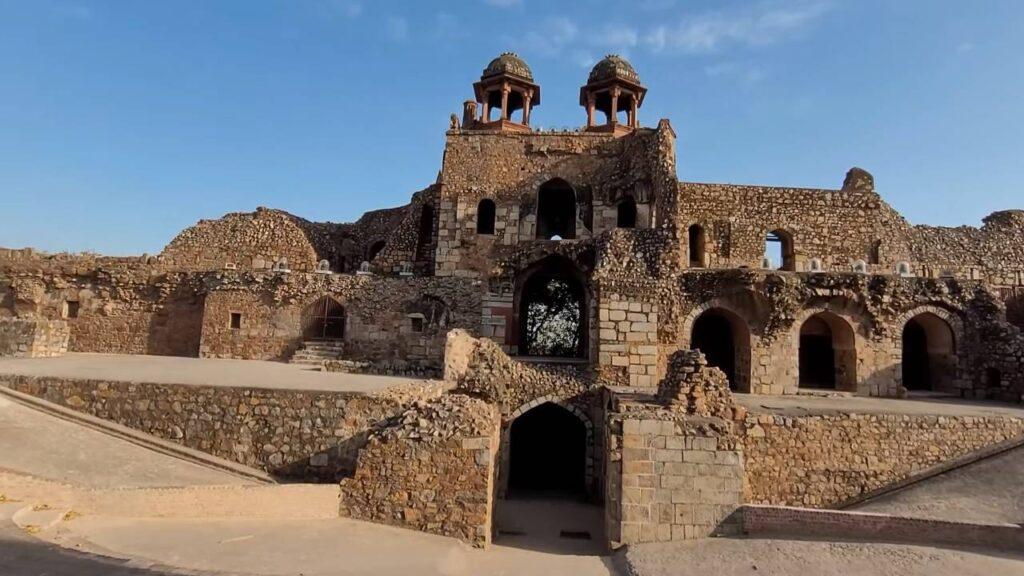
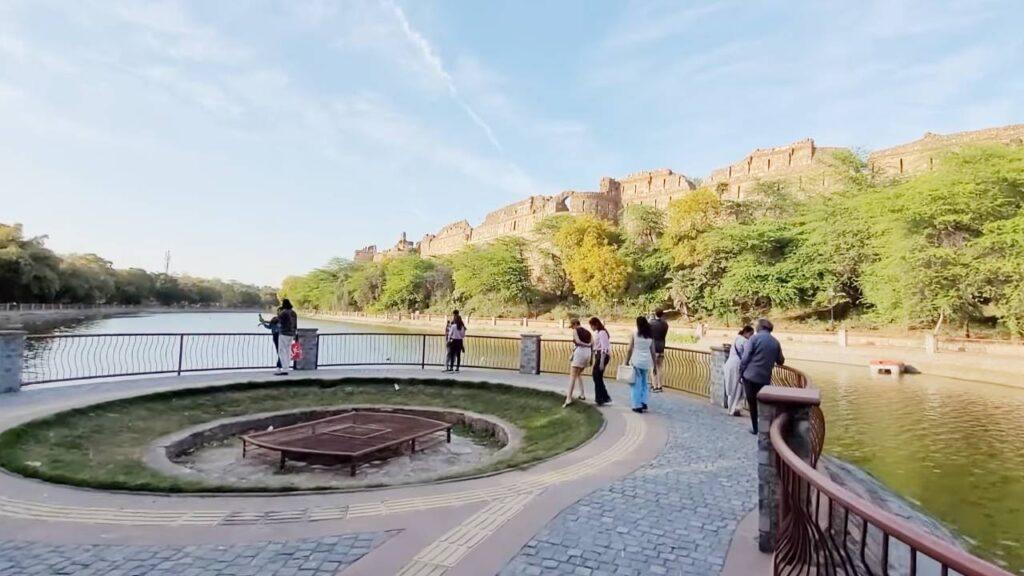
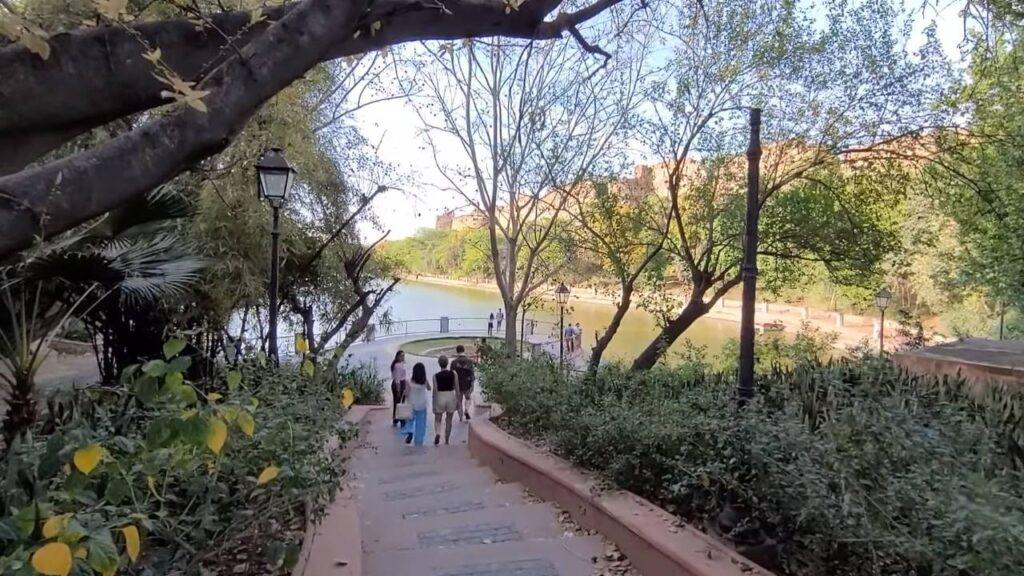
New Delhi, Purana Qila, or the Old Fort, is a captivating blend of history, heritage, and old-world charm. This ancient fortification is not just one of the oldest structures in Delhi but also a living narrative of the city’s rich tapestry of events. Standing tall as a testament to the Mughal era, Purana Qila invites both history aficionados and casual explorers to wander through its sprawling grounds and delve into the stories etched within its walls.
Purana Qila should be a highlight on your itinerary. Iconic edifice, with its robust sandstone ramparts and imposing gateways, has been a silent witness to the unfolding of Delhi’s history. It’s a place where every nook and cranny has a tale to tell, from the grandeur of emperors to the struggles of common folk.
Location: Mehrauli, New Delhi
Open daily from 7:00 am to 5:00 pm
₹ 30 for Indian nationals; ₹ 500 for foreign visitors; complimentary entry for children below 15 years.
History of Purana Qila, also known as the Old Fort, is a fascinating chronicle of Delhi’s evolution from a strategic stronghold to a symbol of cultural heritage. It is believed that the fort was originally built by Emperor Humayun in the early 16th century. He not only constructed the massive gateways that still stand today but also established his new capital, Din Panah, at this very site.
Fort’s narrative took a dramatic turn when Sher Shah Suri seized control after defeating Humayun in 1540. He renamed the fortification Shergarh and, during his brief five-year reign, added several significant structures to the complex, leaving an indelible mark on its architectural legacy.
Purana Qila has also been a silent witness to the ebb and flow of human history. During World War II, it served as a refugee camp for approximately 3000 Japanese nationals. Later, in the wake of India’s independence and the subsequent partition, the fort provided refuge to thousands of people migrating to Pakistan.
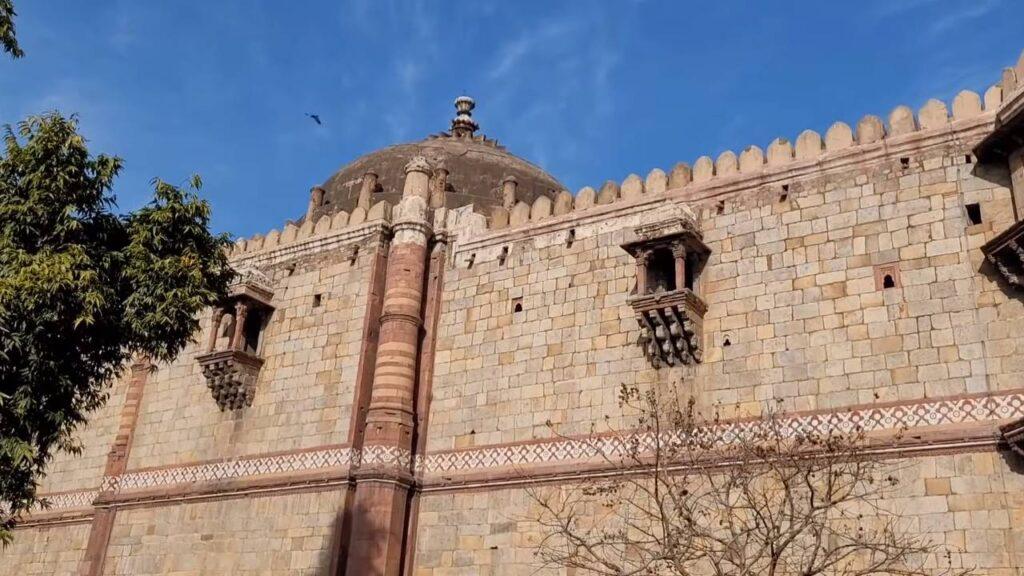
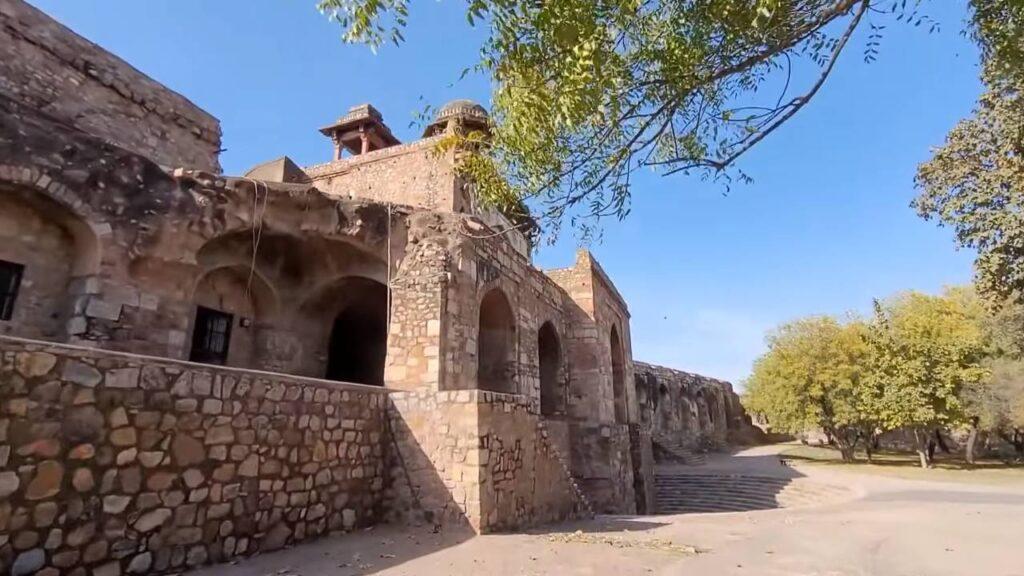
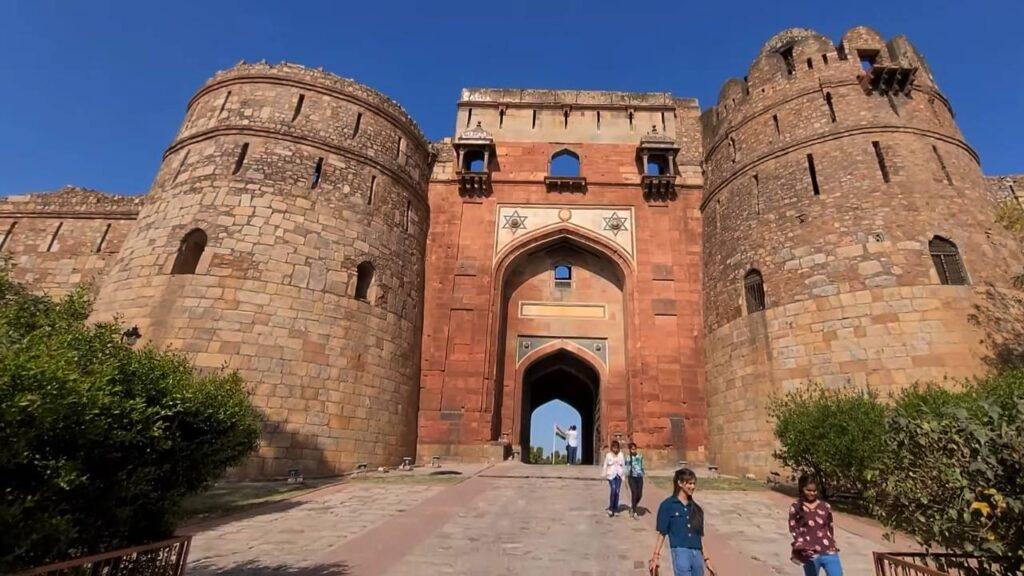
Purana Qila, an architectural marvel in New Delhi, stands tall with its formidable walls reaching heights of up to 18 meters. Spanning a length of 1.5 kilometers, these ancient ramparts enclose a space rich in history and grandeur. Fort’s layout is a testament to Mughal precision, organized in a robust rectangular configuration.
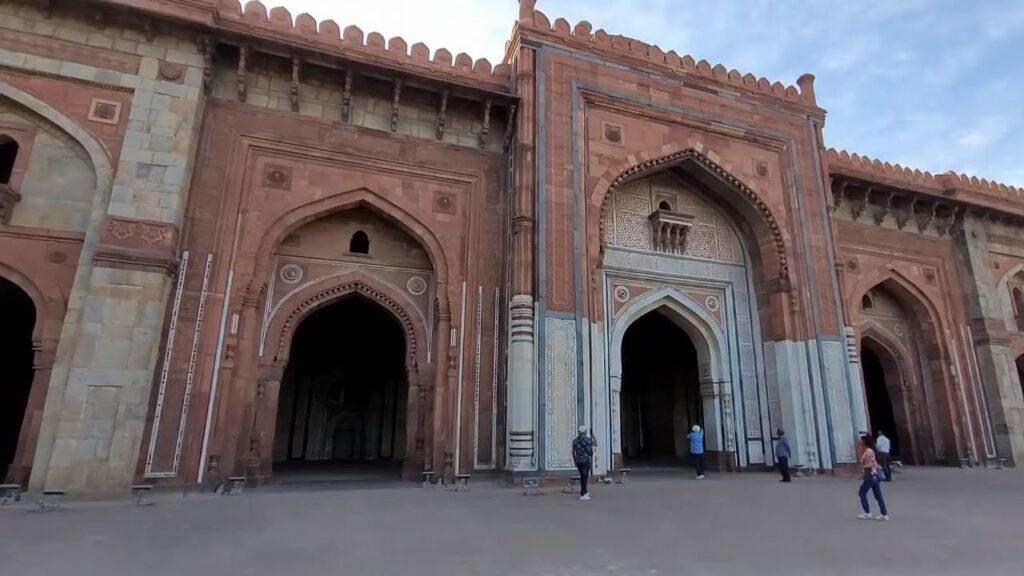
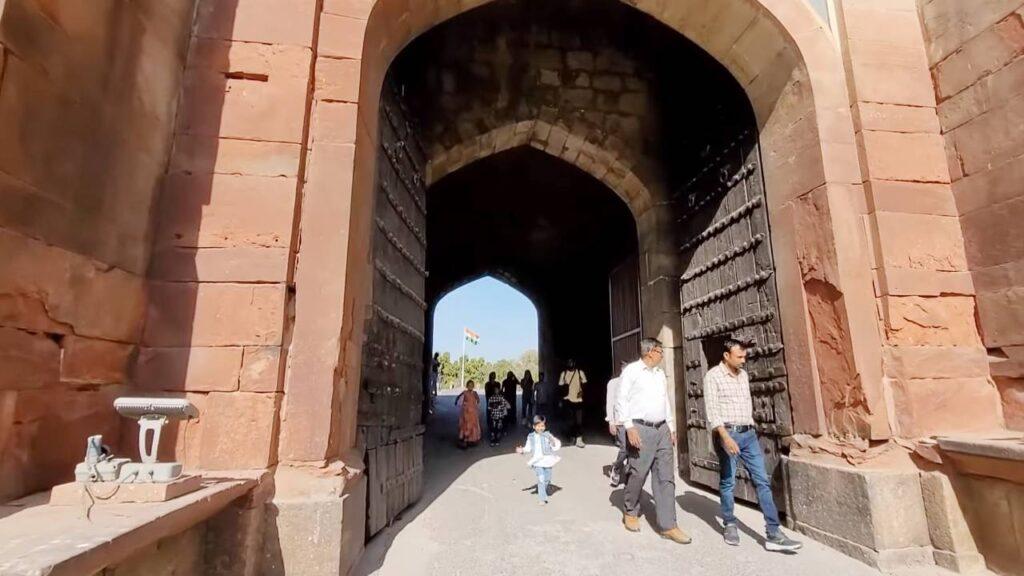
Fortification boasts three grandiose arched gateways: the Bara Darwaza (Big Gate), serving as the main entrance; the Humayun Darwaza (South Gate), named after the great Mughal Emperor Humayun; and the Talaqi Darwaza (Forbidden Gate), each echoing the tales of a bygone era. These gateways are remarkable for their uniformity in design—each a two-tiered edifice crafted from enduring sandstone and crowned with imposing semi-circular bastions that stand as silent sentinels to history.
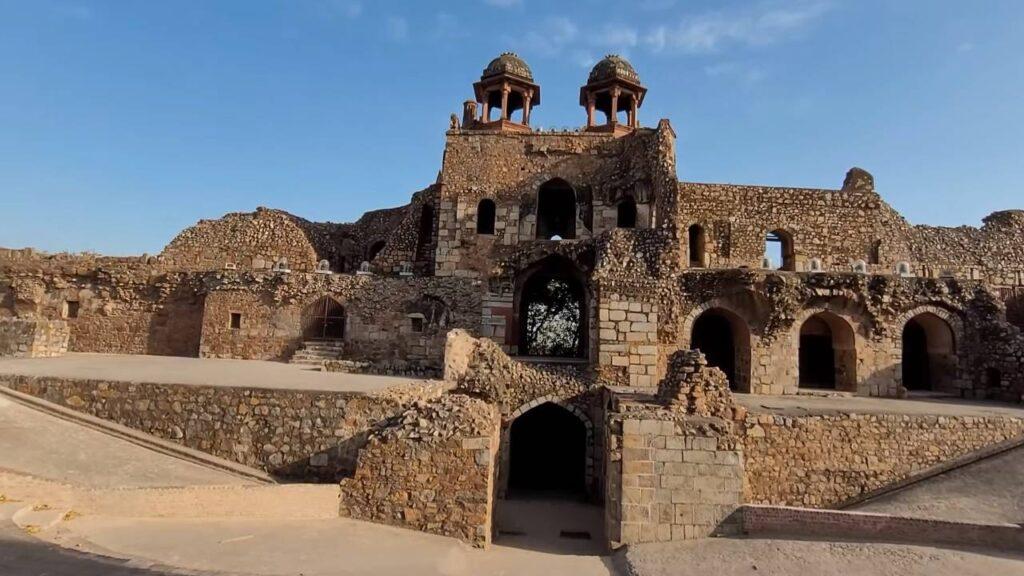
Adorning these gateways are exquisite pavilions (chhatris) and balconies (jharokhas), intricately detailed and showcasing the finesse of Rajasthani craftsmanship. Within the confines of the fort lies the Qila-i-Kunha Mosque, a splendid example of Indo-Islamic architecture. This mosque is distinguished by its five majestic doorways, inviting visitors to step inside and explore its serene ambiance.
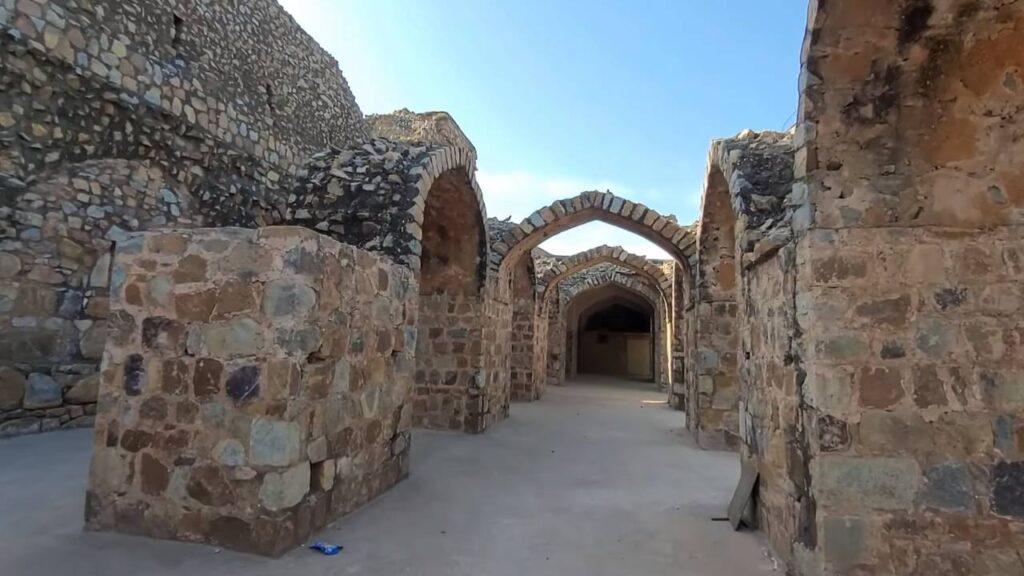
Purana Qila, with the fort’s once resplendent interior yielding to the relentless march of the elements and history’s vicissitudes. Despite this, the fort’s exterior continues to command awe and admiration, standing as a proud testament to its storied past. While many of its internal structures have succumbed to decay, a resilient few have withstood the test of time, preserving the essence of their original splendor.
Purana Qila transforms into a stage for the mesmerizing light and sound show, Ishq-e-Dilli. Celebrated as one of India’s premier light and sound spectacles, this show is a visual feast that narrates the saga of Delhi’s history, from the era of the Mughals to contemporary times.
Show Details:
This nightly event, aptly named ‘Romancing Delhi’, is not just a show but a journey through time, illuminating the fort’s ancient walls with stories of love, war, and politics. It’s an opportunity to witness the heart of Delhi’s heritage in a symphony of lights and sounds, making it an unforgettable experience for all who attend. History enthusiast or a lover of the arts, the Purana Qila light and sound show is an enchanting way to connect with the capital’s storied past.
Reaching Purana Qila in New Delhi is quite straightforward, thanks to the city’s well-connected transportation network. Best ways to get there:
By Metro: Nearest metro station to Purana Qila is Pragati Maidan Metro Station on the Blue Line. From there, the fort is just about 2 km away, which you can cover by taking a short auto-rickshaw ride or even walking if the weather permits.
By Car: If you’re driving, you can navigate to Purana Qila via the well-known Delhi-Mathura road, which is close to the National Zoological Park. There’s ample parking available near the fort.
By Bus: Delhi’s state-run buses are another convenient option. Catch a bus that stops near Pragati Maidan or the National Zoological Park and walk to the fort from there.
From the Airport: For those coming straight from the Indira Gandhi International Airport, you can take a metro to New Delhi Station and then switch trains to reach the zoo, which is in proximity to Purana Qila.
Purana Qila, also known as the Old Fort, is one of the oldest forts in Delhi. It was built by the second Mughal Emperor Humayun and Surid Sultan Sher Shah Suri.
Purana Qila’ (Old Fort) is one of the oldest forts in Delhi. The present citadel at Purana Qila was believed to have been built under Humayun and Afghan Sher Shah Suri (‘The Lion King’). Excavations point to traces from the 3rd century BC, the pre-Mauryan period.
Set in the middle of bustling city, Purana Qila is a historic beauty and a must visit attraction in Delhi.
Purana Qila is open to visitors every day from 7:00 am to 5:00 pm.
A: Yes, there is an entry fee. It costs ₹ 20 for Indian nationals and ₹ 200 for foreign tourists. Charges for still cameras and camcorders are ₹ 0 and ₹ 25, respectively.
A: Purana Qila showcases Indo-Islamic Afghan architecture, with massive gateways and walls made of red sandstone.
Rajghat, situated along the serene banks of the Yamuna River in New Delhi, is one of India’s most…
Life in New Delhi can be exhilarating, but the daily grind often takes a toll on our mental…
Delhi is a city where every street echoes with stories from the past and every corner bursts with…