

Andorra Passport: Travel, Tax, Benefits and Residency Perks Explained
Andorra, a small yet thriving principality nestled between France and Spain in the Pyrenees mountains, has become an…
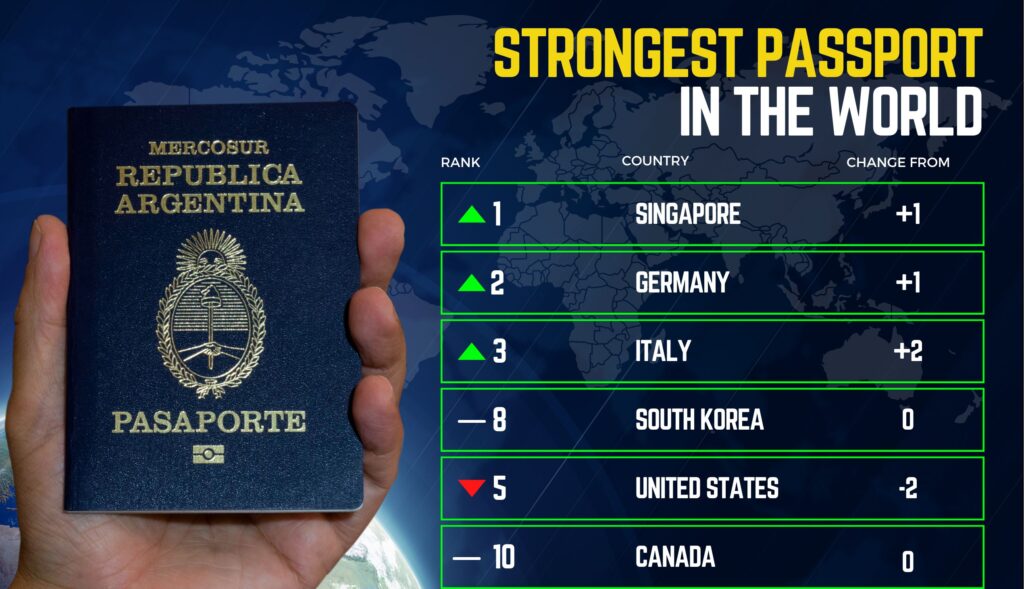
Explore the top-ranked passports in the world, their benefits, and how different countries compare in terms of global mobility
In 2025, the rankings reveal interesting shifts in global mobility, with some nations maintaining their dominance and others improving their standing. Countries like Singapore, Japan, Germany, and France continue to lead the list with extensive travel privileges, while powerful nations like the United States and Canada hold strong but slightly lower positions. Meanwhile, emerging economies, including India, are gradually enhancing their passport strength through new diplomatic ties and agreements.
A passport is a freedom and accessibility for a person to across international borders. Some passports provide visa-free or visa-on-arrival access to a vast number of destinations, while others come with restrictions that limit mobility. The strength of a passport is determined by various factors, including diplomatic relations, economic stability, and international agreements. Every year, global rankings such as the Henley Passport Index and Arton Capital’s Passport Index evaluate and rank passports based on the number of countries their holders can visit without a visa.
| Rank | Country | Visa-Free Access |
|---|---|---|
| 1st | Singapore | 193 |
| 2nd | Japan | 190 |
| 2nd | South Korea | 190 |
| 3rd | Denmark | 189 |
| 3rd | Finland | 189 |
| 3rd | France | 189 |
| 3rd | Germany | 189 |
| 3rd | Ireland | 189 |
| 3rd | Italy | 189 |
| 3rd | Spain | 189 |
| 4th | Austria | 188 |
| 4th | Belgium | 188 |
| 4th | Luxembourg | 188 |
| 4th | Netherlands | 188 |
| 4th | Norway | 188 |
| 4th | Portugal | 188 |
| 4th | Sweden | 188 |
| 5th | Greece | 187 |
| 5th | New Zealand | 187 |
| 5th | Switzerland | 187 |
| 6th | Australia | 186 |
| 6th | United Kingdom | 186 |
| 7th | Canada | 185 |
| 7th | Czechia | 185 |
| 7th | Hungary | 185 |
| 7th | Malta | 185 |
| 7th | Poland | 185 |
| 8th | Estonia | 184 |
| 8th | United Arab Emirates | 184 |
| 9th | Croatia | 183 |
| 9th | Latvia | 183 |
| 9th | Slovakia | 183 |
| 9th | Slovenia | 183 |
| 9th | United States | 183 |
| 10th | Iceland | 182 |
| 10th | Lithuania | 182 |
| 11th | Liechtenstein | 181 |
| 11th | Malaysia | 181 |
| 12th | Cyprus | 178 |
| 12th | Romania | 178 |
| 13th | Bulgaria | 177 |
| 13th | Monaco | 177 |
| 14th | Chile | 175 |
| 15th | Andorra | 171 |
| 16th | San Marino | 170 |
| 17th | Argentina | 169 |
| 17th | Brazil | 169 |
| 17th | Hong Kong (SAR China) | 169 |
| 17th | Israel | 169 |
| 18th | Brunei | 164 |
| 19th | Barbados | 163 |
| 20th | Bahamas | 159 |
| 21st | Mexico | 158 |
| 22nd | St. Vincent and the Grenadines | 156 |
| 22nd | Uruguay | 156 |
| 23rd | Seychelles | 155 |
| 23rd | St. Kitts and Nevis | 155 |
| 24th | Vatican City | 154 |
| 25th | Antigua and Barbuda | 152 |
| 26th | Mauritius | 150 |
| 26th | Trinidad and Tobago | 150 |
| 27th | Costa Rica | 149 |
| 28th | Grenada | 147 |
| 28th | Panama | 147 |
| 28th | Ukraine | 147 |
| 29th | St. Lucia | 146 |
| 30th | Paraguay | 145 |
| 31st | Dominica | 144 |
| 31st | Macao (SAR China) | 144 |
| 32nd | Peru | 142 |
| 33rd | Taiwan (Chinese Taipei) | 139 |
| 34th | Serbia | 138 |
| 35th | El Salvador | 135 |
| 36th | Guatemala | 134 |
| 36th | Solomon Islands | 134 |
| 37th | Colombia | 132 |
| 37th | Honduras | 132 |
| 38th | North Macedonia | 129 |
| 38th | Samoa | 129 |
| 38th | Tonga | 129 |
| 39th | Marshall Islands | 128 |
| 39th | Montenegro | 128 |
| 40th | Nicaragua | 127 |
| 40th | Tuvalu | 127 |
| 41st | Bosnia and Herzegovina | 123 |
| 41st | Kiribati | 123 |
| 42nd | Micronesia | 122 |
| 42nd | Palau Islands | 122 |
| 43rd | Albania | 121 |
| 43rd | Georgia | 121 |
| 44th | Moldova | 119 |
| 45th | Venezuela | 114 |
| 46th | Russian Federation | 111 |
| 47th | Türkiye | 104 |
| 48th | Qatar | 102 |
| 49th | South Africa | 98 |
| 50th | Belize | 96 |
The Henley Passport Index 2025 ranks passports based on the number of countries accessible visa-free or with a visa-on-arrival. This year’s rankings continue to highlight Singapore as the strongest passport, followed closely by several European and Asian nations. Countries like Japan, Germany, France, and Italy maintain high positions due to strong diplomatic ties and international agreements. While the United States and Canada remain among the top-ranked, their rankings have slightly declined in recent years. These rankings reflect not only the diplomatic influence of a country but also its economic stability and global standing in terms of travel freedom.
According to the Henley Passport Index 2025, the top 10 passports are:
Note: Rankings are based on the number of destinations accessible without a prior visa.
The United States passport remains one of the most powerful in the world, ranking 6th in the Henley Passport Index 2025 with access to 186 destinations without requiring a prior visa. While the U.S. passport has historically been among the top-ranked, its position has slightly declined in recent years due to shifting diplomatic relations and evolving visa policies worldwide.
Despite this, the U.S. passport still offers extensive global mobility, allowing American travelers to enter key destinations in Europe, Asia, and the Americas without needing a visa. Countries within the European Union, the United Kingdom, Japan, South Korea, and several Caribbean nations remain visa-free for U.S. citizens. Additionally, many countries offer visa-on-arrival or electronic travel authorization (ETA) options, ensuring smooth entry for Americans.
One of the reasons for the U.S. passport’s ranking drop is the tightened visa restrictions imposed by certain countries. For instance, some nations have introduced stricter entry requirements due to geopolitical tensions, security concerns, and immigration policies. However, the United States continues to maintain strong diplomatic relations, and its passport remains a symbol of extensive travel freedom, economic influence, and global trust.
With one of the world’s largest diplomatic networks, U.S. citizens also benefit from robust consular support in case of emergencies while traveling abroad. As international relations evolve, the ranking of the U.S. passport may fluctuate, but it remains a highly valuable travel document, providing access to a vast number of destinations with ease.
| Rank | Country | Visa-Free Destinations | Change from 2024 | Index Source |
|---|---|---|---|---|
| 9 | United States | 184 | -2 | Henley Passport Index |
The Canadian passport continues to be one of the strongest in the world, ranking 7th in the Henley Passport Index 2025 with visa-free or visa-on-arrival access to 185 destinations. This ranking reflects Canada’s strong diplomatic ties, global reputation, and commitment to international cooperation.
Canadian passport holders enjoy hassle-free travel to major regions such as Europe, the United Kingdom, Australia, Japan, South Korea, and much of North and South America. Additionally, Schengen Zone countries, which include Germany, France, Italy, and Spain, allow Canadian travelers to enter without a visa for short stays. The country also benefits from visa waiver agreements with nations in Asia, Africa, and the Middle East, ensuring smooth global mobility for its citizens.
One of the reasons Canada remains highly ranked is its stable political environment, strong economy, and international partnerships. The country is part of the Five Eyes Alliance, G7, and Commonwealth Nations, strengthening its diplomatic standing. Furthermore, Canada’s passport provides a high level of consular protection, ensuring support for citizens abroad in case of emergencies.
Although Canada ranks slightly below countries like Singapore, Germany, and Japan, it remains among the world’s most desirable passports due to its ease of travel, global recognition, and minimal visa restrictions. As international policies evolve, Canada continues to maintain its place as a key player in global mobility.
Beyond the top 10, several other countries offer their citizens strong global mobility with extensive visa-free access. These nations may not rank at the very top, but they still provide significant international travel freedom, reflecting their diplomatic influence, economic stability, and international agreements. European countries continue to dominate the rankings, with nations like Poland, Lithuania, and Slovakia securing high positions due to their EU membership and strong diplomatic ties. Meanwhile, Malaysia leads among Asian countries outside the top 10, highlighting its growing global presence. The United Arab Emirates (UAE) also stands out, as its rapid rise in recent years showcases the country’s strategic efforts in securing visa agreements worldwide. Each of these passports allows its holders to travel freely across continents, enhancing business, tourism, and international relations.
Expanding beyond the top 10, the next ten positions are:
These rankings underscore the global mobility and international standing of these nations, allowing their citizens to travel easily for tourism, business, and education. While some countries have moved up the rankings due to new diplomatic agreements, others continue to maintain their positions due to long-established visa policies.
A passport’s strength is not just about the number of visa-free destinations—it is shaped by a combination of diplomatic, economic, and security factors. Countries that rank higher on global passport indexes have worked to establish strong international relationships, maintain stable economies, and implement cutting-edge security features in their travel documents. These factors ensure that their citizens enjoy easier and more convenient global mobility.
The more diplomatic agreements a country has, the stronger its passport becomes. Nations with extensive international ties often secure visa waivers and reciprocal travel agreements, making it easier for their citizens to travel abroad. For instance, Singapore and Germany have maintained strong diplomatic networks, enabling them to rank at the top of the Henley Passport Index. Similarly, the European Union’s Schengen Agreement allows passport holders from member countries to travel freely within the region, strengthening their passport rankings.
Countries with strong economies are often perceived as low-risk nations by others, which leads to greater trust and easier visa policies. Wealthier nations have more travelers who are financially stable, reducing the likelihood of overstays or illegal immigration. For example, countries like Japan, Switzerland, and the United States maintain high rankings because of their economic influence and low visa rejection rates.
The security features of a passport also play a crucial role in determining its strength. Nations that invest in biometric technology, digital security, and fraud prevention are more likely to be granted visa waivers. Countries such as Singapore, Germany, and Canada have incorporated advanced biometric chips and anti-counterfeit technology, increasing trust among other nations and making travel easier for their citizens.
Understanding the costs associated with obtaining or renewing a passport is important for travelers. Below is a summary of passport fees for some of the top-ranking countries:
1. United States
Note: The passport card is valid for land and sea travel to Canada, Mexico, Bermuda, and the Caribbean but not for international air travel.
2. Canada
Note: These fees apply to Canadians applying outside of Canada and the United States.
3. Singapore
Note: Singapore offers a single type of passport with a 10-year validity for all citizens.
4. Germany
Note: Fees may vary if applying from a German embassy or consulate abroad.
5. United Kingdom
Note: Applying by paper forms may incur higher fees.
Please be aware that passport fees are subject to change and may vary based on application methods, additional services, or regional policies. It’s advisable to consult the official government websites or local consular services for the most current information before applying.
Singapore consistently ranks at the top due to its strong international relations, economic prowess, and highly secure passport system. The country has built a positive diplomatic reputation, leading to more visa-free agreements with foreign governments. Additionally, Singapore’s strong economy and low risk of illegal migration make it easier for its citizens to be granted entry worldwide.
In summary, a passport’s power is not just about a country’s global standing but also its efforts in maintaining strong diplomatic ties, ensuring economic stability, and implementing secure travel documentation. These factors collectively influence how freely citizens can travel across borders.
For the most current information, always refer to official government sources or the latest updates from the Henley Passport Index.
The strongest passport in 2025 is from Singapore, offering visa-free access to over 193 countries.
Yes, the US passport ranks in the top 10, allowing visa-free or visa-on-arrival access to 187+ countries.
The UK passport ranks in the top 5, with access to 190+ destinations without a visa.
Singapore and Japan consistently top the list with access to over 193 countries visa-free.
Strong passport allows for hassle-free travel, fewer visa requirements, and easier global mobility.
Rankings fluctuate due to diplomatic agreements, visa policy changes, and global political relations.
Both are powerful, but the UK passport currently has access to more destinations visa-free than the US.
Visa-free access, global mobility, and international relations impact a passport’s strength.
Yes, holding two passports from powerful nations increases travel flexibility and visa-free access.
Malta, Portugal, and Dominica offer citizenship through investment with strong passports.
Yes, UK citizens now need visas for certain EU work and residency permits, but still have strong travel access.
It is a ranking system that evaluates passports based on global visa-free access.
Yes, a strong passport allows for easier business travel, work visas, and international networking.
Yes, places like China, Russia, and India require visas even for top-ranking passports.
Investing in a second citizenship, applying for dual nationality, or naturalization can help get a stronger passport.
Andorra, a small yet thriving principality nestled between France and Spain in the Pyrenees mountains, has become an…
Air travel has become an essential mode of transportation for millions of people around the world. Whether you…
Applying for a Canada infant passport can be one of the more time-consuming tasks for new parents, but…

3 comments