

Bamberg Christmas Market: Hidden Stalls, Local Traditions & Secret Festive Experiences
The Bamberg Christmas Market is not just any holiday market—it’s a celebration of tradition, craftsmanship, and festive charm,…
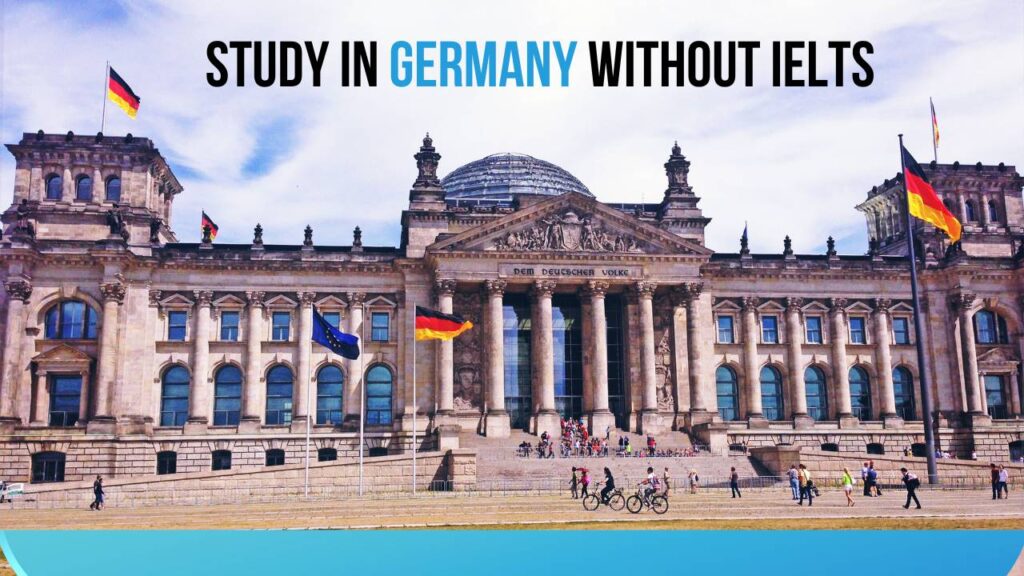
Germany has become one of the top destinations for international students seeking quality education at an affordable cost. While many believe that clearing IELTS is a mandatory requirement to study in Germany, the truth is – it’s not always necessary. Yes, you can study in Germany without IELTS by meeting specific eligibility criteria and providing alternative proof of English proficiency.
I will walk you through everything you need to know about studying in Germany without IELTS, including eligibility conditions, alternatives to IELTS, and a comprehensive list of German universities that accept students without IELTS.
Germany is home to some of the world’s top-ranking universities, offering a wide range of programs in engineering, medicine, social sciences, business, and the arts. Education in public universities is often tuition-free or available at minimal costs, even for international students.
Germany’s globally recognized education system, strong economy, and multicultural environment make it a hub for academic excellence and professional growth. Importantly, many universities in Germany offer English-taught programs, making it easier for international students to study without needing to learn German.
Yes, it is possible to study in Germany without IELTS if you meet certain conditions set by specific universities. IELTS is commonly required to prove English proficiency, especially for English-taught courses. However, German institutions also accept other forms of language proof, depending on your background and academic history.
To be eligible for studying in Germany without IELTS, you need to meet at least one of the following conditions:
If your last degree or high school education was completed in an English-speaking country or in an institution where the medium of instruction was English, some German universities may waive the IELTS requirement. You will need to provide an official “Medium of Instruction” (MOI) certificate issued by your previous institution confirming that your studies were in English.
Many German universities accept other internationally recognized English proficiency tests such as:
For programs taught in the German language, you can avoid IELTS altogether by demonstrating proficiency in German through tests like:
Some private and public universities in Germany offer selected degree programs that do not mandate IELTS or any other standardized English test. Admission into these programs typically requires interviews or internal language assessments conducted by the university itself.
For international students aiming to study in Germany, English proficiency is a critical requirement, especially for programs taught in English. While IELTS is one of the most popular English language tests globally, many German universities recognize alternative proofs of English proficiency, providing flexibility to applicants. Here are the most common and widely accepted alternatives to IELTS in Germany:
TOEFL is a globally recognized English language test that measures your ability to use and understand English at the university level. Many German universities accept a minimum TOEFL iBT score of 80 or above for admission into English-taught programs. TOEFL scores are particularly favored by universities with strong international programs and technical courses.
Cambridge English exams, such as the C1 Advanced (formerly known as CAE) and C2 Proficiency (CPE), are prestigious qualifications demonstrating advanced English skills. These certificates are widely accepted by German universities as proof of English proficiency and can often replace IELTS scores during the application process.
Some universities in Germany accept a Medium of Instruction certificate as proof that your previous degree was taught entirely in English. This document, usually issued by your former university or college, confirms that English was the language of instruction for your academic studies. An MOI certificate is particularly useful for students who have completed their education in English-speaking countries or institutions.
The Duolingo English Test has emerged as a convenient and affordable alternative to traditional English proficiency tests. Conducted entirely online, it offers flexible scheduling and rapid results. While its acceptance is growing among German universities, it is essential to check the specific requirements of your chosen institution, as some still do not accept the Duolingo test.
Many leading universities in Germany understand the diversity of English proficiency certifications and offer options for students who do not hold IELTS scores. Here is a list of top universities where you can apply without IELTS, provided you meet other English language criteria:
This university offers a wide range of programs in English and accepts MOI certificates as sufficient proof of English proficiency, making it easier for students from English-medium backgrounds.
Known for its engineering and technology courses, it accepts TOEFL scores and MOI certificates. The university also occasionally offers internal language assessments.
With multiple master’s programs taught in English, this university accepts TOEFL, MOI certificates, and other recognized English tests as alternatives to IELTS.
This technical university has flexible English proficiency requirements, allowing students to submit certificates from their previous institutions confirming English instruction.
One of Germany’s oldest and most prestigious universities, Freiburg offers many international programs where IELTS is not mandatory if students fulfill other proof-of-English requirements such as MOI or TOEFL.
Giessen is known for its international outlook and accepts MOI certificates along with recognized English test scores, supporting students who have studied in English.
This university allows applications without IELTS if the applicant can demonstrate English proficiency through alternative means, including prior education or other recognized language tests.
Some English-taught programs at this university waive IELTS requirements if students pass university-specific language tests or provide other proof of proficiency.
Offers the option to study without IELTS for students who have completed prior education in English or present other acceptable alternatives such as TOEFL or Cambridge certificates.
A highly ranked technical university, RWTH Aachen may waive IELTS for certain courses based on the applicant’s academic background and performance in interviews or internal language tests.
If you are planning to study in Germany without IELTS, it is crucial to understand the application process carefully. While skipping the IELTS test can save time and money, the application process still requires careful planning and proper documentation. Below is a comprehensive step-by-step guide to help you navigate through the process smoothly:
The first and most important step is to identify the courses and universities that accept students without requiring IELTS. Use reliable sources such as the DAAD (German Academic Exchange Service) database or official university websites to explore available programs. DAAD provides an extensive list of courses offered in English and details about language requirements. When searching, filter programs that explicitly mention “No IELTS required” or accept alternative English proficiency proofs. Also, pay attention to whether the program is a Bachelor’s, Master’s, or PhD level, as requirements can differ.
Once you have shortlisted a few universities and programs, visit their official admission pages to thoroughly check the eligibility criteria. Confirm if the university accepts alternative English proficiency certifications like TOEFL, Cambridge English Certificates, Duolingo English Test, or the Medium of Instruction (MOI) certificate. Make sure to also verify the application deadlines for international students since missing them could delay your admission.
Preparing your documents is a critical step that requires attention to detail. Most universities will require the following:
Some universities may ask for additional documents such as a portfolio (for art/design courses) or work experience certificates.
Most German universities use UniAssist, a centralized application service that processes applications for many institutions. You will need to create an account on UniAssist, upload your documents, pay the application fee, and send your application. Some universities, especially private or technical ones, may accept applications directly on their official portals. Be sure to follow the specific instructions of the university you apply to and keep track of submission confirmation emails.
While some universities waive IELTS, they might require you to undergo an interview or take an internal English language test to verify your proficiency. These interviews are often conducted via video calls and assess your communication skills and ability to study in English. Prepare well for these interviews by practicing common questions about your academic background, goals, and motivation.
After successfully clearing the admission process, you will receive either a conditional or unconditional offer letter from the university. The offer letter is essential for your student visa application. Once you have this letter:
Obtaining a student visa to study in Germany without IELTS is possible if you have met the university’s English proficiency alternatives and fulfilled other criteria. Here’s a list of essential visa requirements:
You must provide an official offer or admission letter from a recognized German university confirming your acceptance into a study program.
Instead of IELTS, present the alternative proof of English proficiency accepted by your university. This could be your TOEFL scores, MOI certificate, Cambridge English certificate, or results of a university-conducted English test/interview.
Germany requires international students to prove they have sufficient funds to cover their living expenses while studying. A blocked account (Sperrkonto) is usually required, which holds approximately €11,208 per year (about €934 per month). This account assures the visa office that you have adequate finances to support yourself without working illegally.
Valid health insurance is mandatory for all international students in Germany. If your university or state health insurance does not cover you, you must purchase a private or public health insurance plan approved in Germany.
Your passport must be valid for the entire duration of your stay in Germany.
Submit notarized copies of your academic documents, including transcripts and degree certificates, as required by both the university and visa authorities.
Fill out the student visa application form thoroughly and attach recent passport-sized photos as per German visa standards.
Being aware of visa timelines and requirements will help you avoid last-minute delays. Applying without IELTS is entirely feasible if you follow the correct procedure, meet eligibility conditions, and prepare thoroughly.
FAQs
Yes, it is possible to study in Germany without IELTS. Many German universities accept alternative proofs of English proficiency such as the Medium of Instruction (MOI) certificate, TOEFL, Cambridge English qualifications, or even conduct their own English language tests or interviews.
Common alternatives include the TOEFL exam, Duolingo English Test, Cambridge English Certificates (CAE, CPE), and the Medium of Instruction (MOI) certificate proving that your previous education was conducted in English. Some universities also accept internal language assessments or interviews.
Yes, an MOI certificate stating that your previous education was conducted entirely in English is often accepted by many universities as proof of English proficiency, allowing you to apply without IELTS.
Several universities, especially technical and private universities, offer programs without requiring IELTS. Examples include the University of Applied Sciences Europe, Hochschule Fresenius, and some courses at TU Munich and RWTH Aachen. Always check the specific university’s admission requirements.
No, if you choose to study in programs taught in German, you need to prove proficiency in the German language instead of English. Tests like TestDaF or DSH are usually required, but IELTS is not necessary for these programs.
You can submit your TOEFL score, Duolingo English Test result, Cambridge English certificates, or an MOI certificate. Some universities may also require you to appear for an internal interview or English test.
Not having IELTS will not negatively affect your student visa application as long as you provide an alternative accepted proof of English proficiency along with your university admission letter and meet other visa requirements.
You can use platforms like the DAAD course database or university websites to filter programs based on language requirements. Look specifically for programs that mention “No IELTS required” or accept alternative language proofs.
Yes, many scholarships in Germany do not mandate IELTS specifically. Scholarships like DAAD and university-specific grants focus on academic merit and financial need rather than only English test scores.
It depends on the university. Many public universities use UniAssist as a centralized application platform, while others, especially private or technical universities, allow direct application through their portals. Always check the university’s official instructions.
The Bamberg Christmas Market is not just any holiday market—it’s a celebration of tradition, craftsmanship, and festive charm,…
Bamberg, a UNESCO World Heritage city in the heart of Franconia, Germany, is celebrated not just for its…
Bamberg Beer Festivals in Germany capture the spirit of Bavarian brewing like nowhere else, offering travelers an authentic…


1 comment